
The DND Rogue Class rewards a player who notices opportunities: the distracted guard, the unguarded staircase, the enemy standing beside your very distracting Fighter. You do not need to play a criminal, steal from the party or disappear into a corridor alone. A dependable scout, cheerful treasure hunter or meticulous investigator can be just as much a Rogue as a masked burglar.
This guide uses the published 2024 rules, now labelled 5.5e on D&D Beyond. It separates older rules where they matter. If you are choosing between classes, start with our D&D class comparison.
What does a Rogue bring to the party?
A Rogue combines useful skills with one particularly valuable hit. Dexterity supports attacks with suitable weapons, initiative, light-armour defence and several practical skills. Constitution helps you survive mistakes; your next priority depends on whether you want an observant scout, investigator or persuasive infiltrator.
The class has a d8 Hit Die, light armour and four class skill choices. Expertise makes selected proficient skills especially reliable by doubling their Proficiency Bonus. Choose skills that fit both your character and the campaign. Investigation is an excellent choice for a mystery, but a wilderness adventure might reward Perception more often.
Your job is not to win every scene. Find the route, identify the problem and involve the person best equipped to solve it. The official Rogue rules contain the full progression; the following sections turn those features into decisions at the table.
Sneak Attack without the guessing
The name causes unnecessary confusion. You do not have to be sneaking. Sneak Attack adds damage to one qualifying hit per turn using a Finesse or Ranged weapon. Usually you qualify through Advantage, or because a non-Incapacitated ally is within 5 feet of your target and your attack does not have Disadvantage.
Before attacking, ask three questions: is this a suitable weapon, what qualifies this attack, and have I already used Sneak Attack this turn? Saying “I shoot the creature next to our Paladin; I have no Disadvantage” makes your intention clear without a rules debate.
Advantage can come from allies, terrain or class features. Do not build your entire plan around repeatedly hiding behind the same crate. Sometimes the dependable answer is simply attacking the enemy your frontline companion is already fighting.
The DND Rogue Class becomes much easier when you treat Sneak Attack as teamwork rather than a private assassination puzzle. Its damage scales with Rogue levels; a multiclass character must check the Rogue table, not use their total character level.
Choose weapons that leave your options open
Weapon Mastery gives the 2024 Rogue another way to create opportunities. A shortsword or shortbow can use Vex: damaging a creature grants Advantage on your next attack against that creature before your next turn ends. A dagger can use Nick, moving the Light property's extra attack into your Attack action instead of spending your Bonus Action.
That combination makes shortsword and dagger useful partners. Attack with one Light weapon, then make the Light property's extra attack with the other. Nick does not create a third attack, and the extra attack normally does not add a positive ability modifier to its damage. Check the official weapon properties and mastery rules when selecting your two mastery weapons.
A worked level 5 turn
Your Rogue has Dexterity 18, a +3 Proficiency Bonus and shortsword/dagger masteries. An ally stands beside your target. You move 15 feet closer, then roll 13 + 7 with the shortsword: 20 hits the target's Armour Class.
The weapon die shows 4. Add 4 for Dexterity and Sneak Attack dice showing 3, 5 and 2: 18 damage. Nick lets you try the dagger within the same Attack action, now with Advantage from Vex after that first hit. If it hits and its die shows 2, that is another 2 damage; Sneak Attack has already been used this turn.
You still have your Bonus Action for Cunning Action: Disengage, then use your remaining 15 feet to retreat. If the shortsword had missed, the dagger could instead deliver Sneak Attack, provided it qualified. That second chance is often more useful than chasing the largest single weapon die.
Make your Bonus Action earn its place
At level 2, Cunning Action lets you Dash, Disengage or Hide as a Bonus Action. You still only have one Bonus Action per turn. Decide whether this turn needs distance, a safe exit or a better attack setup.
Hiding needs suitable circumstances, not just an available button. The 2024 Hide action requires appropriate cover or heavy obscurity and being outside enemies' line of sight, followed by a DC 15 Dexterity (Stealth) check. Agree with the DM about what your surroundings allow before planning around it.
Steady Aim, available at level 3, trades your Bonus Action and mobility for Advantage on your next attack that turn. You cannot have moved already, and your Speed becomes 0 for the rest of that turn. It is useful from a secure position; it is less attractive when the ogre is already measuring you for a sack.

Scout with a return plan
Before scouting, establish what the party needs to learn and how you will report back. “Check whether the bridge is guarded, then return” creates a useful scene. “Explore the entire fortress alone” leaves everyone else waiting and makes rescue difficult.
Use specific questions. Are there footprints heading away from the door? Can the lock be reached without entering the guard's view? Is there a higher route? Describe what you inspect and let the DM decide whether a check is needed.
Carry tools that support your plans, and remember their limits. Thieves' Tools are not a universal answer to magical seals, collapsed passages or a door with someone physically holding it shut. Sometimes the best contribution is telling the Wizard which obstacle needs a spell.
Expertise also supports scenes away from locks. An Insight specialist watches a suspicious negotiation; a persuasive Rogue handles introductions. Choose an area where you enjoy contributing, rather than trying to make every skill number equally impressive.
The levels that change your decisions
Read upcoming features before levelling, particularly those that compete for an action or Reaction.
| Rogue level | What changes in play |
|---|---|
| 1–3 | Build your skill identity, learn Cunning Action, then choose a subclass and gain Steady Aim. |
| 4 | Your first feat choice. Improving Dexterity is a dependable starting point. |
| 5 | Sneak Attack reaches 3d6. Cunning Strike can trade damage dice for effects; Uncanny Dodge adds a defensive Reaction. |
| 6–7 | Two more Expertise skills, then Evasion and Reliable Talent improve your resilience and consistency. |
| 11 | Improved Cunning Strike lets you combine two eligible effects, paying both costs. |
| 14–20 | Devious Strikes expands control options; later defences, an Epic Boon and Stroke of Luck reward staying with the class. |
Cunning Strike is a decision, not an automatic damage upgrade. At level 5, trading one Sneak Attack die for Withdraw can create a safe reposition. Trip may help nearby melee allies, but knocking someone Prone can inconvenience allies shooting from a distance. Ask what helps the whole party this round.
Reliable Talent arrives at level 7 in 2024 and improves checks using a skill or tool proficiency. It does not turn every ability check into a guaranteed success. The official 2024 Rogue comparison explains the revised progression.
Pick a subclass for the scenes you enjoy
The 2024 Player's Handbook offers four Rogue subclasses, chosen at level 3. These recommendations describe play style, not a universal power ranking.
- Thief: an approachable choice for climbing, practical equipment and inventive infiltration. Fast Hands expands what you can do with a Bonus Action, but it still competes with your other Bonus Action options.
- Arcane Trickster: choose this if a little spellcasting sounds more exciting than keeping your character entirely martial. Tricks and magical utility widen your options, while adding spell choices to learn.
- Assassin: suits a player who enjoys preparation, disguises and a decisive opening. Read its revised features carefully; old advice about automatic critical hits against surprised enemies is not the 2024 version.
- Soulknife: mixes psychic blades with psionic support for skills and communication. It fits an unusual investigator or quiet operative without requiring the Arcane Trickster's spell selection.
A subclass should fit the campaign you actually play. Ask whether adventures feature investigations, wilderness travel, social scenes or frequent combat before committing to an elaborate fantasy of infiltrating royal courts.
Two DND Rogue Class builds you can start playing
Both examples use 27-point buy, the 2024 Criminal background and no multiclassing, magic items or species-dependent bonuses. That background allows Dexterity, Constitution and Intelligence increases and grants Alert. Its name need not define your present-day morals: a reformed smuggler or former resistance courier fits perfectly well.
The rooftop problem-solver: Thief
Before background increases, use Strength 8, Dexterity 15, Constitution 14, Intelligence 12, Wisdom 13 and Charisma 10. Put +2 into Dexterity and +1 into Constitution: 8 / 17 / 15 / 12 / 13 / 10.
Criminal supplies Sleight of Hand and Stealth. Choose Acrobatics, Insight, Investigation and Perception as your four Rogue skills; take Expertise in Stealth and Investigation. Use the starting shortsword and dagger with Vex and Nick, keeping the shortbow available when approaching would be foolish.
Choose Thief at level 3. At level 4, Ability Score Improvement adds +1 Dexterity and +1 Constitution, reaching Dexterity 18 and Constitution 16. You now have a durable, straightforward skirmisher with useful investigative skills. Practise one equipment-based idea per session instead of trying to improvise a complicated contraption every round.
The watchful first responder: Assassin
Start with Strength 8, Dexterity 15, Constitution 14, Intelligence 10, Wisdom 12 and Charisma 13. Apply the same background increases: 8 / 17 / 15 / 10 / 12 / 13.
Choose Acrobatics, Deception, Insight and Perception from the Rogue list, alongside the background's Sleight of Hand and Stealth. Expertise in Deception and Stealth supports a cover identity and quiet approach. Select shortbow and dagger masteries, and carry your starting shortsword as a backup.
Choose Assassin at level 3 and the same Dexterity/Constitution increase at level 4. Alert adds your Proficiency Bonus to initiative, helping you act promptly; it also permits an initiative swap with a willing, non-Incapacitated ally. Sometimes letting your controller act first is the clever opening.
Both builds can raise Dexterity from 18 to 20 with their level 8 Ability Score Improvement. Check the Criminal background, Alert and feat prerequisites, and point-buy rules when recording either build.
What changes if your group uses 2014 rules?
Do not combine both versions' most convenient features. The 2014 Rogue does not automatically receive the 2024 Weapon Mastery or Cunning Strike features, and Reliable Talent arrives later. Steady Aim appeared as an optional feature in Tasha's Cauldron of Everything; it was not part of the original 2014 base class.
Background ability increases and Origin feats in the builds above are also 2024 assumptions. Use our 5e character creator for the older rules, or the 2024 character creator for this guide's framework. Confirm edition and permitted books with your DM before choosing options.
Rogue questions answered
Do I have to hide to use Sneak Attack?
No. Advantage or a qualifying nearby ally can satisfy its conditions. Being hidden is one possible setup, not a requirement for the feature.
Can Sneak Attack happen twice in a round?
Potentially. The limit is once per turn, not once per round. A qualifying Opportunity Attack on another creature's turn can deliver another Sneak Attack. It still needs the usual conditions and your available Reaction. See the official Sage Advice rulings.
Can a spell or unarmed strike deliver Sneak Attack?
Not simply because you rolled an attack. Sneak Attack requires a hit using a Finesse or Ranged weapon. Do not add it to an ordinary spell attack or Unarmed Strike.
Does a Rogue get Extra Attack?
The base Rogue class does not gain that feature. The Light property and Nick can provide another attack in the circumstances described above, without granting the Fighter's Extra Attack progression.
Does Uncanny Dodge halve every attack?
No. It spends your Reaction to halve damage from one attack that hits you when you can see the attacker. It does not halve a Fireball's saving-throw damage. Save the Reaction thoughtfully, especially if an Opportunity Attack might matter.
Is Rogue a good beginner class?
Yes, if movement, skills and a focused attack sound appealing. A Thief avoids spell preparation, although you still need to learn Sneak Attack conditions and action economy. A player wanting to stand still and trade repeated attacks may prefer our Fighter guide.
Your first-session checklist
For your DND Rogue Class character, write down your attack bonus, Sneak Attack dice, two mastered weapons and usual escape plan. Pick a reason to trust the party. Then practise a turn in our dice roller, or use the Rogue character sheet to keep your essentials together.
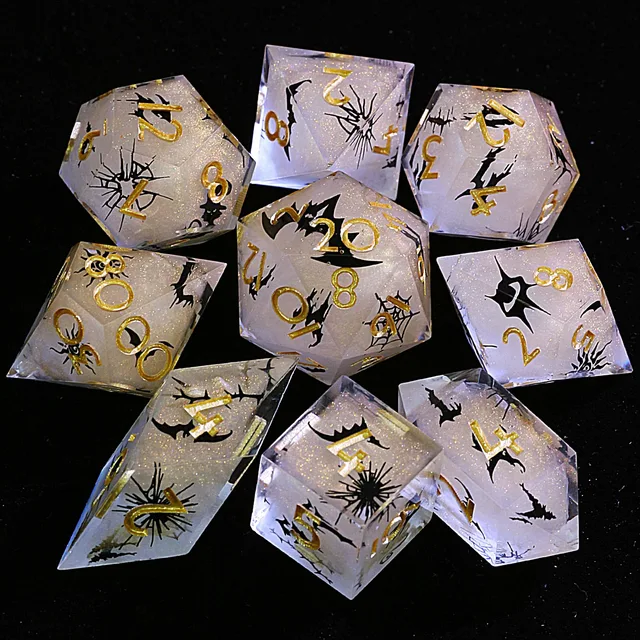
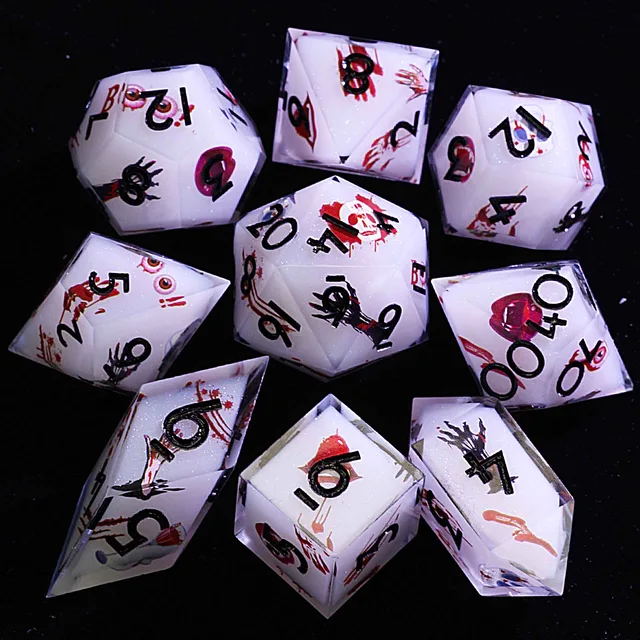
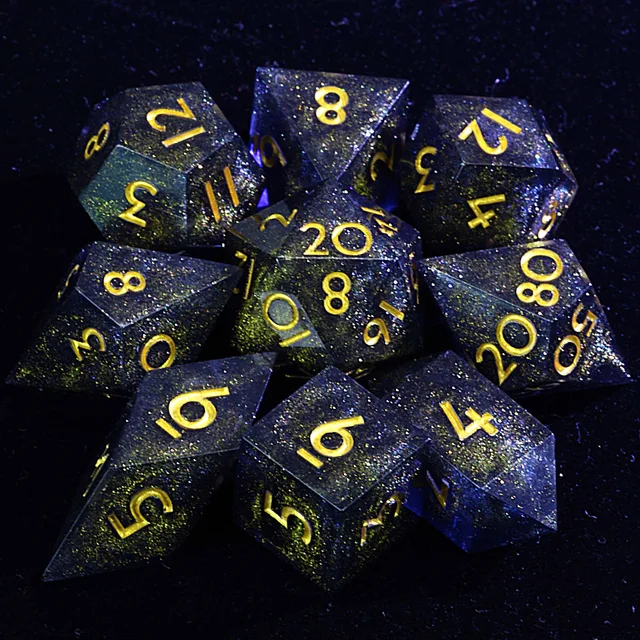
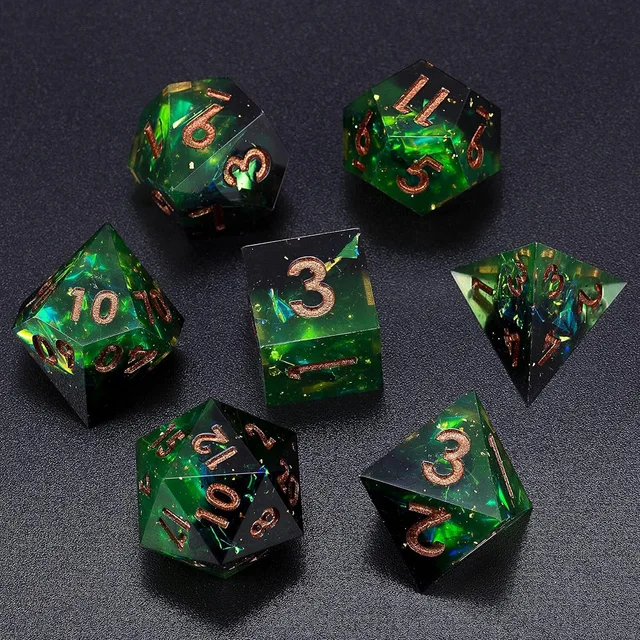
You can revisit our character-building guide for the wider process. When your adventurer is ready, the Rogue dice collection below can supply the little handful of possibility that every excellent plan eventually requires.
Rules summaries adapted from SRD 5.2.1 by Wizards of the Coast LLC, under CC BY 4.0. Additional published options are linked where discussed. Builds, examples and recommendations are DND Den editorial commentary.