
The bridge keeper has a good reason for refusing to lower the drawbridge. The brass pin that holds his winch together is in two pieces. Your Artificer asks to see both halves. A minute later the winch turns, the party crosses, and the keeper wants to know what you charge for house calls. If fixing one small thing sounds as satisfying as landing the final hit, you’ll get along with the DND Artificer Class.
This guide uses the Artificer published in Eberron: Forge of the Artificer in 2025 for the 2024 rules. You’ll meet all five subclasses and get two builds you can play from level 1. If your group uses the 2014 rules and Tasha’s Cauldron of Everything, there’s an edition comparison below. Still deciding between the inventor and the scholar? Compare the Wizard’s approach to magic or browse the roundup of all thirteen classes.
Start with the work your Artificer does
Give your inventor a customer. A lantern repairer knows the night watch by name. A saddler knows exactly where a dragon rider’s harness will chafe. A potter who makes bowls for a monastery can recognise the sound of a hollow wall. Now you have a reason to go somewhere, someone who might ask you for help, and something to do while the Bard talks to the mayor. Ask your DM which trade regularly takes you into the place where the adventure begins.
Intelligence is your spellcasting ability. Put your highest score there. Constitution gives you Hit Points and helps you keep Concentration when you take damage. Dexterity helps your initiative and most medium armour benefits from up to +2. A first-level Artificer starts with a d8 Hit Point Die, Constitution and Intelligence saving throw proficiencies, and training with light armour, medium armour and shields. A free hand for an appropriate spellcasting tool belongs in your equipment plan. Decide where the tools go before you draw a weapon.
For new players, the simplest routine is an attack cantrip, one spell that changes a fight, and one trick you can use when nobody is fighting. Choose Fire Bolt for the attack and prepare Faerie Fire to help allies hit. Tinker’s Magic gives you Mending alongside your chosen cantrips. Between fights, a torn sail or snapped axle pin gives that last spell a turn in the spotlight.
Three ways to make something at the table
Repair something that exists. Mending takes a minute and repairs one break or tear measuring up to a foot in any dimension. At the bridge, the keeper has both pieces of the pin. If one half has fallen into the river, finding it makes a good job for the swimmer in the party. Repairing a cracked enchanted object can restore its shape, but restoring lost magic is a separate problem. Check the spell’s repair limits when a ruling matters.
Make gear you need today. With Tinker’s Tools in hand, Tinker’s Magic lets you use a Magic action to produce an item from its list. A rope, a grappling hook and a torch solve very different problems. Each item lasts until you finish your next Long Rest. With Intelligence 16 you get three uses per Long Rest. A hook and a rope are two items, so making both costs two uses. Before you spend one, find out what everyone already packed.
Make a lasting piece of equipment. If a customer commissions a new lock for their shop, the usual crafting rules are a better fit. Your DM can establish the tools, materials, time and price involved. Asking who sells good brass in this town can lead to a more interesting evening than treating the whole job as one roll. The equipment and tools rules give you and the DM somewhere to start.

How Replicate Magic Item works at level 2
Give your Artificer character sheet a column for plans you know and another for items the party carries. At level 2 you know four plans from the eligible list and can have two different replicated items at once. When you finish a Long Rest with your Tinker’s Tools, you can make items from those plans. Knowing how to make four things gives you choices for tomorrow. The two-item limit tells you what the party can actually use today.
Imagine you know the plans for a Bag of Holding, Goggles of Night, Sending Stones and a Cap of Water Breathing. For a cellar search, make the bag for the porter and the goggles for the scout who lacks Darkvision. For an underwater wreck, the cap earns its place. Someone still has to decide who wears it, where the others wait and how the diver will signal trouble. Equipment suggests a plan. The players supply the rest.
Give each item a line for its wearer, attunement if required, and the job it’s doing. Before you make a third item at level 2, check which existing item would vanish first and tell its holder. Avoid surprising the scout halfway through a tunnel. The publisher’s overview of the revised Artificer explains when more plans and later item features enter play.
Which of the five Artificer subclasses should you play?
- Alchemist. Play the person with an elixir for an emergency and two interesting bottles after a Long Rest. Tell your friends what the morning’s random elixirs do and who has each one. A potion in the medic’s pocket is little help to a scout two rooms away.
- Armorer. Build a suit with a job. Guardian suits someone who wants enemies to pay attention to them. Infiltrator suits a quiet approach and ranged attacks. Dreadnaught gives the revised Armorer a third choice, built around size and reach. Draw one detail on the suit that gives away its maker.
- Artillerist. Bring an Eldritch Cannon. You use a Bonus Action to activate it, so look at both the enemy and your allies before picking what it does. In a cramped kitchen a protective pulse of Temporary Hit Points can beat sending flame past the cook.
- Battle Smith. Take this for a Steel Defender and magic-weapon combat. You want to care where two figures stand. Parking your defender beside a vulnerable friend often matters more than adding a few points of damage.
- Cartographer. Hand out linked maps, help allies act early and teleport around the battlefield. This is a good choice if you enjoy arranging the party’s entrance and escape. The publisher’s guide to the five specialisations shows how each develops.
Two DND Artificer Class builds from level 1 to 5
Both builds use the standard array and single-class levels. Their starting scores already include background increases. You can swap the suggested species for one you enjoy. The character creation walkthrough explains how those choices fit together.
The Locksmith and Latch, a Battle Smith pair
Play a Dwarf with the Artisan background and a retired locksmith’s apron. Start with Strength 12, Dexterity 14, Constitution 14, Intelligence 17, Wisdom 10 and Charisma 8. That includes +2 Intelligence and +1 Dexterity. The two scorched patches on your apron are the same distance apart as Latch’s front feet. He’s the clockwork badger you’ll finally get working at level 3.
At level 1 choose Fire Bolt and Mage Hand as your two cantrips. Prepare Cure Wounds for emergencies and Faerie Fire for the group. At level 2 learn the Weapon +1 plan alongside three utility plans. Make a magic warhammer for when your Battle Smith training comes online at level 3. Until then, use the cantrip or a simple weapon you know. Give the party a say in what the second item should be.
At level 3, Battle Ready lets you use Intelligence for attack and damage with a magic weapon. You now have proficiency with the hammer. In one hand its damage is 1d8 + 4 with your current Intelligence and the +1 weapon. Your attack roll is d20 + 6. Command Latch with your Bonus Action, and leave a lane for him to get beside an ally. At level 4 take War Caster and bring Intelligence to 18. Its Advantage on Concentration saves from damage helps you keep a spell going while you and Latch hold a doorway. At level 5 Extra Attack gives you a second attack with the Attack action and your first level 2 slots open up. Prepare Aid for days when the whole crew expects a bruising.
The Floodline Surveyor, a Cartographer for tight spaces
Play a Halfling Scribe who records old flood marks inside city gates. Start with Strength 8, Dexterity 14, Constitution 14, Intelligence 16, Wisdom 13 and Charisma 10. Take +1 Intelligence and +2 Dexterity from your background. Your maps show where the water went last winter. Someone has been scraping the highest mark off the walls, and you’d like to know why.
Choose Fire Bolt for a ranged attack and Guidance for careful work. At level 1 prepare Feather Fall and Cure Wounds. At level 2 learn plans for the bag, goggles, stones and cap described above. Ask where tomorrow’s inspection goes before choosing your two items. At level 3, take Cartographer. Give your linked maps to the companions who regularly get separated and keep one if you want its benefits. Each holder adds 1d4 to initiative. Decide what mark represents each person so the maps feel like yours.
At level 4 use Ability Score Improvement to raise Intelligence to 18. At level 5 prepare Web as an alternative for holding a narrow passage. It competes with Faerie Fire for Concentration. If an enemy is already lit up and your Rogue is about to attack it, tell the Rogue before you change spells. The Cartographer feature guide explains the maps, Portal Jump and Guided Precision.
A worked turn in the tide mill
Your level 5 surveyor spots two intruders crossing a mill floor. The Fighter is still on the stairs. You have Intelligence 18 and a +3 Proficiency Bonus. Place the cube for Faerie Fire over the intruders, clear of the stairs. Use your action and one of the Cartographer’s free castings. Each intruder makes a Dexterity save against DC 15. One fails. Attackers who can see that target have Advantage on their attack rolls against it.
Next turn, cast Fire Bolt at the glowing intruder. Roll two d20s with Advantage, keep the higher and add 7. A 13 becomes a 20 to hit. On a normal hit, suppose the two damage dice show 4 and 7. Guided Precision adds your Intelligence modifier once this turn, bringing the total to 15 Fire damage before resistance. You still hold Concentration on Faerie Fire. At this level, taking damage cannot break your Concentration on that particular spell. Casting Web still ends it.
DND Artificer Class FAQ
Is the Artificer in the 2024 Player’s Handbook?
The revised class appears in the 2025 Eberron supplement. Its rules work with the 2024 core game. Ask which source the DM is using before choosing features. At a 2014 table, Tasha’s Cauldron of Everything offers the older Artificer with Magical Tinkering and Infuse Item. Its class progression, infusion choices and subclass features belong together. Cartographer comes from the later book.
Can another player use my magic items?
Yes. Check each item’s own attunement and use requirements. A friend can carry your Bag of Holding while you wear your Goggles of Night. Write down who has the bag before the group splits up. If the Rogue is in the belfry and the rope is in the bag downstairs, the ownership question has acquired some urgency.
Can I change my spells after a Long Rest?
Yes. The revised class uses its table to set the number of prepared level 1+ spells, and you can also change one chosen Artificer cantrip after a Long Rest. Spell slots are the number and levels of castings available. Preparing two different spells still leaves you free to spend both slots on the same spell. On your sheet, keep the list in pencil and mark each slot when you spend it.
Can I design my own inventions?
Start by describing an existing effect. Your Feather Fall could look like a ribbon unspooling upwards from a brass reel. The spell keeps its usual trigger, range and targets. For an invention with a genuinely new effect, give the DM a short sketch of what it does, who can use it and how often. That gives them something concrete to price, revise or turn into a quest.
What should I look forward to after level 5?
At level 6 Magic Item Tinker lets you do more with replicated gear, including recharging a suitable item. At level 7 keep your Reaction available for Flash of Genius when someone fails an ability check or saving throw. At level 11 Spell-Storing Item can put an eligible Artificer spell of up to level 3 into another pair of hands. Ask your teammate which spell they would actually spend an action using.
Pack the workshop
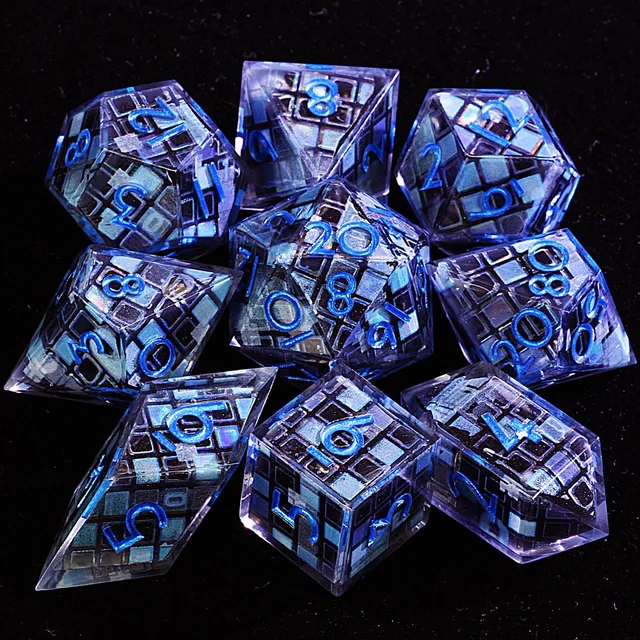
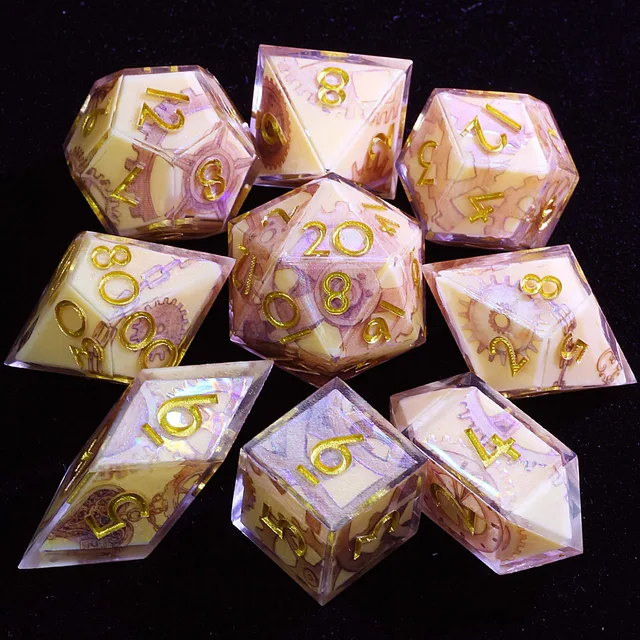
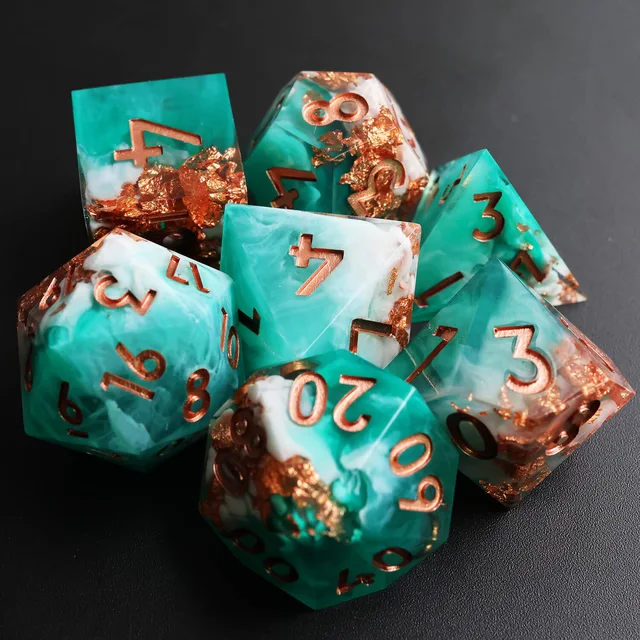
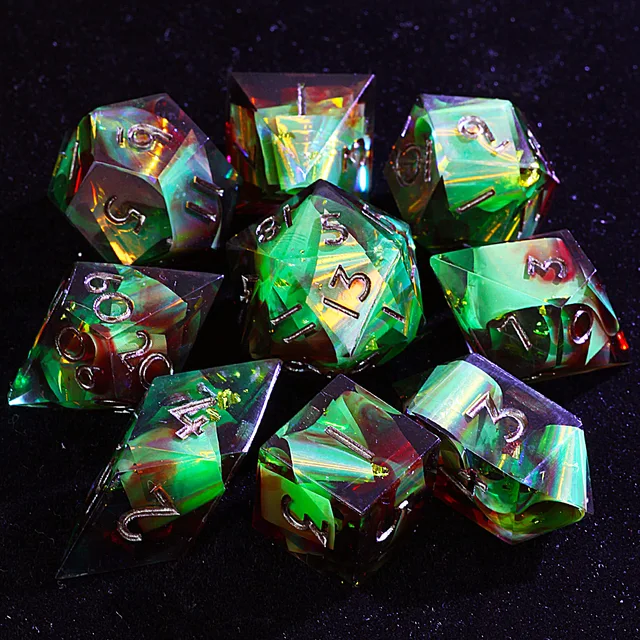
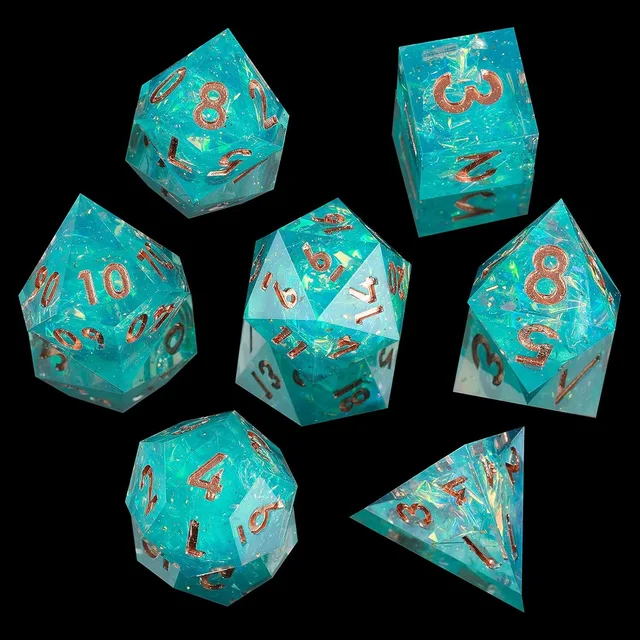
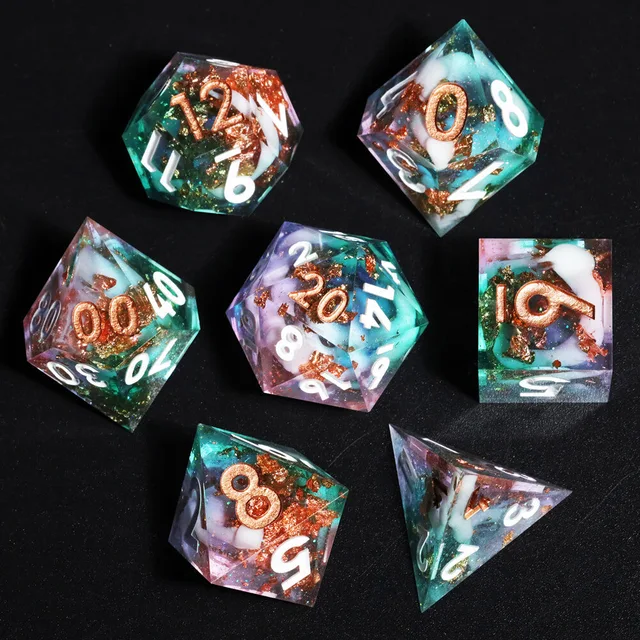
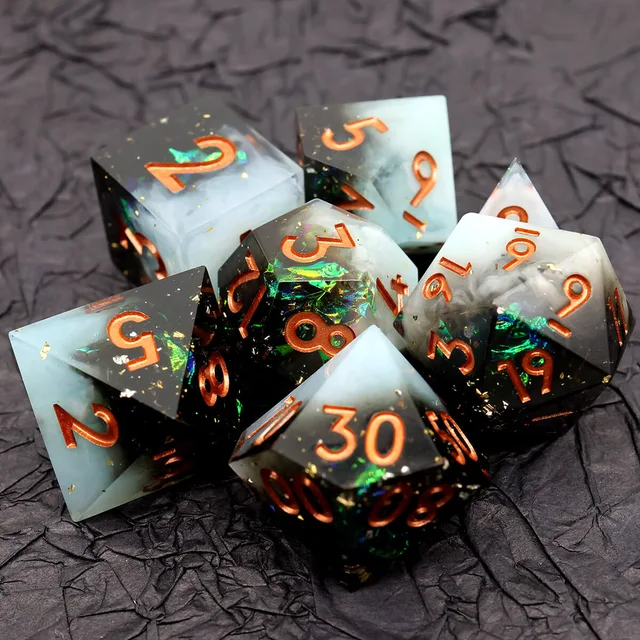
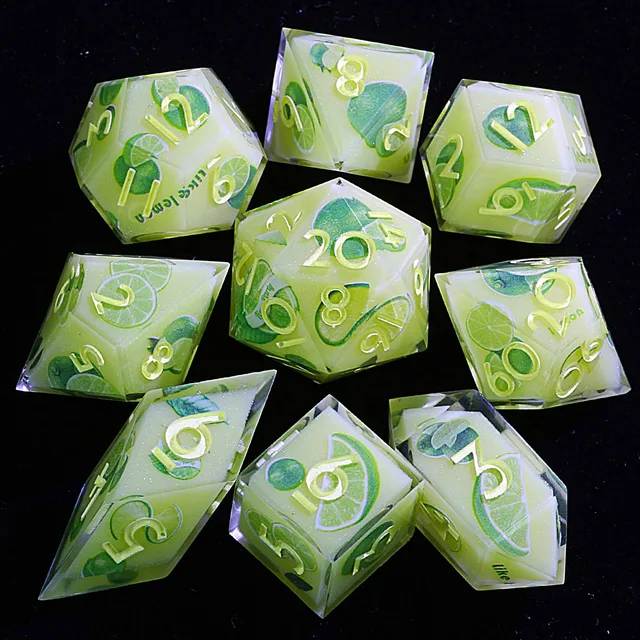
Before you put away your DND Artificer Class sheet, hand each player a note with their item’s name and one sentence about its use. Keep a spare note for the one tool you wished you’d packed today. At the next Long Rest, you’ll already know what to build. You can find dice for the workbench in the Artificer collection below.
Core rules references include material from the System Reference Document 5.2.1 by Wizards of the Coast LLC, available on the official SRD page under CC BY 4.0. The Artificer class and subclass sources are linked in the guide.