
The drawbridge is up, somebody hears dogs, and the Fighter is already asking how high the wall is. Your Druid has another question. Where does the drain empty? A frog can follow the current. A few words with the dogs might explain who raised the bridge. And if the guards do give chase, twenty feet of tangled roots can buy everyone a head start. The delight of the DND Druid Class is finding the third way into a scene.
This guide uses the 2024 rules unless a section names 2014. Start with one dependable spell, one animal shape you like, and a reason your character cares about this particular patch of earth. The rest can wait until the party makes camp. If you're still choosing a role, our D&D class roundup puts the Druid alongside the other options. For help filling in your first sheet, follow the step-by-step character-building guide.
Build your first Druid, from ability scores to spells
Put your best score in Wisdom. It powers Druid spell attacks, sets the saving throw enemies must beat, and helps with Perception and Survival. Constitution buys hit points and helps you maintain Concentration when hurt. Dexterity helps you act early enough to place a spell before the melee fighters close. A Druid uses a d8 Hit Point Die and starts with training in Light armor and Shields. Ask who is carrying a light before you leave town. The person with good eyes often ends up at the front.
Your level 1 Primal Order gives you a choice. Magician adds a Druid cantrip and improves Intelligence checks using Arcana or Nature. It suits the player who wants to tell whether those claw marks belong to an animal or something imitating one. Warden grants training with Medium armor and proficiency with Martial weapons. Take it if you want stronger defenses in your ordinary body. You can choose either order with any circle later. Read the Druid class progression.
At first level you prepare four level 1 spells and have two slots to spend on them. You can spend both slots on the same spell. You also get two Druid cantrips before any bonus from Magician, and the Druidic feature gives you Speak with Animals prepared. A useful first day's list is Entangle for a fight, Healing Word for an ally in trouble, Goodberry for a lean journey, and Detect Magic for an unfamiliar ruin. Change your prepared list after a Long Rest when tomorrow's plans call for it.
Wild Shape forms by level and challenge rating
From Druid level 2, spend a Bonus Action and one use of Wild Shape to become a Beast whose form you know. Read the creature type, Challenge Rating (CR), and speeds on its current stat block. A low CR alone does not qualify a flying creature. You start with two uses, recover one on a Short Rest, and recover all on a Long Rest. At the end of a Long Rest you can swap one known form for another eligible one.
| Druid level | Known forms | Maximum CR | Examples and jobs |
|---|---|---|---|
| 2–3 | 4 | 1/4, no Fly Speed | Spider (CR 0) climbs, Frog (CR 0) swims, Wolf (CR 1/4) travels with the party. |
| 4–7 | 6 | 1/2, no Fly Speed | Crocodile (CR 1/2) brings a dangerous bite to a canal crossing. Earlier forms still qualify. |
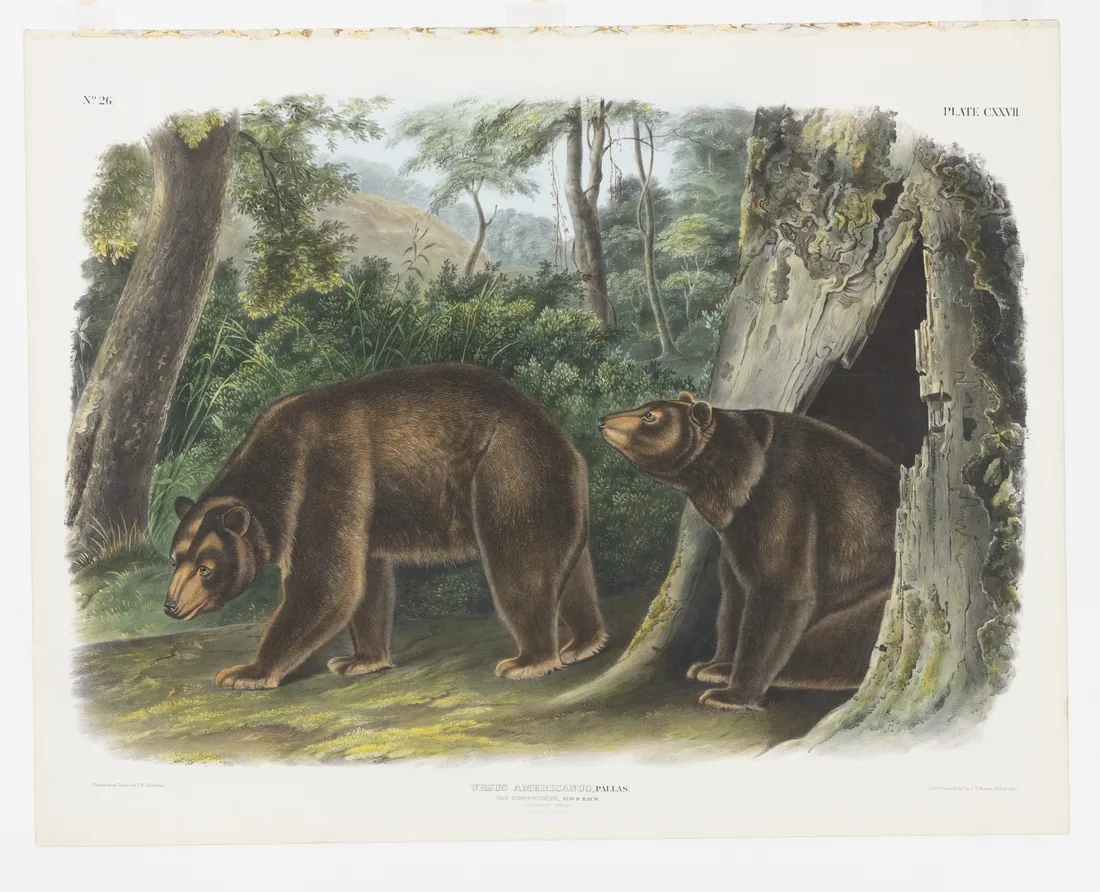
| 8+ | 8 | 1, flight allowed | Owl (CR 0) scouts from above. Brown Bear (CR 1) gives you a strong, Large body on the ground. |
Circle of the Moon changes the CR column. From level 3 its maximum CR is your Druid level divided by three, rounded down. That means CR 1 at level 3, CR 2 at level 6 and CR 3 at level 9. The flight restriction still lasts until level 8. Use the form's own speeds and attacks. A spider has an excellent way onto a ceiling, but it still needs a hiding place if a sentry is looking straight at it. See the official Moon Druid walkthrough.
Give your forms jobs on the character sheet. Next to Frog, write “underwater drain.” Next to Spider, write “up the wall.” Take a fourth form for your actual campaign. A Riding Horse (CR 1/4) makes more sense on a courier's route than in a mine full of ladders. Talk to the DM about which beasts are available from other books, and bookmark your four stat blocks. Your friends will appreciate this most on the evening their escape depends on how fast a frog swims.
What changes when you turn into an animal?
In 2024 you keep your own hit points and gain Temporary Hit Points equal to your Druid level when you transform. A level 3 Moon Druid gains nine instead. Temporary Hit Points absorb incoming damage first and never add together. Losing the last one does not end your shape. You retain your mental ability scores and ability to speak. Decide what happens to your gear as you transform. A key that merges into your wolf body is going to be tricky for your Rogue to borrow.
You can keep Concentration on a spell you cast before transforming. Damage can still force a Constitution saving throw. Most low-level Druids cannot cast in beast form, although the revised Moon Druid can cast its Circle of the Moon spells there. Keep those spells marked separately. At level 18, Beast Spells opens up wider casting with component restrictions. The class text and the official Wild Shape guide are worth keeping beside your animal cards.
Pick a circle for the turns you want to take
In the revised Player's Handbook you choose your circle at level 3. Land is for the player who reads tomorrow's itinerary before preparing spells. After a Long Rest you can choose arid, polar, temperate or tropical land for that day's circle spells. At level 3, temperate gives you Misty Step for an awkward ledge, while tropical gives you Web to cover a passage. You can live in a temperate forest and still choose tropical magic on dungeon day.
Moon suits someone who looks forward to the animals themselves. You gain tougher combat forms and a floor for beast Armor Class equal to 13 plus your Wisdom modifier. Sea suits the player who likes getting close enough to drive foes away from a vulnerable friend. Consider where your allies want opponents to finish their turns. Stars offers a different use for Wild Shape through Starry Form. Its Archer, Chalice and Dragon options support ranged attacks, healing and protecting Concentration respectively. For a coastal campaign, compare the publisher's Circle of the Sea preview before committing to a swimming theme.
Two DND Druid Class builds you can take to level 5
The field naturalist — Circle of the Land
A naturalist keeps a drawer of carefully labeled tracks and has just found one with too many toes. Use the standard array with the Sage background. Start with Strength 8, Dexterity 13, Constitution 14, Intelligence 12, Wisdom 15 and Charisma 10. Put Sage's +2 in Wisdom and +1 in Constitution for 17 and 15. Choose Magician. For your three Druid cantrips, try Guidance, Thorn Whip and Starry Wisp. Choose utility spells such as Mage Hand with Sage's Magic Initiate (Wizard) feat. See the Sage background and its options.
At level 3 choose Land and try temperate first. In a crowded room you can teleport out of danger and use a cantrip on the same turn, assuming you have the required actions. At level 4 put one point each in Wisdom and Constitution for 18 and 16. At level 5 your spell save DC is 15. Prepare Dispel Magic on the morning you enter the old observatory. Your job there is to work out what the ward protects, and give the party a choice about opening it.
The cattle drover — Circle of the Moon
This Druid learned to stand between hungry beasts and a herd. One winter they discovered that standing there as a bear worked even better. Use Farmer, with Strength 12, Dexterity 14, Constitution 13, Intelligence 8, Wisdom 15 and Charisma 10 before background increases. Add two to Wisdom and one to Constitution. Farmer's Tough feat helps when a fight follows you back into your ordinary shape. Pick Warden and keep a shield handy for those moments.
At level 2 learn Wolf for the road and Frog for flooded ground. At level 3 choose Moon and learn Brown Bear using your Long Rest swap. With Wisdom 17 your Moon form has at least AC 16. Hold space in front of a vulnerable ally and give them room to withdraw. At level 4 take War Caster and raise Wisdom to 18. Your beast AC floor reaches 17 and you have Advantage on Constitution saves to maintain Concentration. At level 5, Wild Resurgence lets you spend a spell slot to regain one Wild Shape use when you have none left. Save that option for an emergency. A spell slot spent on another transformation cannot also pick an ally up with healing.
How to play a Druid turn without catching your allies in it
Picture a level 3 party in a broken mill. Your Fighter is holding a narrow door. Two bandits are approaching across the floor, and your friend's best escape runs along the south wall. Place Entangle so its 20-foot square catches the bandits and leaves the southern route clear. Other creatures already in the square when you cast must make the Strength save, including friends. With Wisdom 17, your DC is 13. A bandit rolling 9 with a +2 bonus is Restrained. Your Fighter now has Advantage on attacks against that target.
Sketch the patch on the map or mark its corners with spare dice. The spell creates Difficult Terrain. A third bandit entering it later spends extra movement but does not make that initial save. On your next turn, a cantrip lets you contribute while keeping the roots in place. If the Fighter drops, Healing Word can get them conscious while your existing spell continues. Save Guidance for later because it would take over your Concentration. More fights turn on that small decision than on your choice of animal.
For a different problem, try Spike Growth. Its ground deals 2d4 Piercing damage per five feet traveled through the area. This works best when the opposition has somewhere it urgently wants to go. In a room where everyone is already standing shoulder to shoulder, blocking the door might only keep your own reinforcements out. Let the party Rogue know which approach is clear before their turn starts.
DND Druid Class FAQ
Do I turn back when my Wild Shape runs out of Temporary Hit Points?
In 2024, an otherwise conscious Druid stays in animal form. Suppose your level 3 Moon Druid has 14 hit points and nine Temporary Hit Points. A hit dealing 11 damage uses up the nine and takes two from your own total. You are still a bear with 12 hit points. If damage leaves you Unconscious, that includes the Incapacitated condition, which does end Wild Shape. An older Druid sheet handles the same attack differently.
Can I turn into an owl or a giant eagle?
A 2024 Owl is a CR 0 Beast, but it has a Fly Speed. Learn it at Druid level 8 or later, including for Circle of the Moon. The revised Giant Eagle is a Celestial, so it fails the Beast requirement even when flight is allowed. Check the actual stat block your DM uses, especially if somebody brings an older monster card.
How does 2014 Wild Shape work differently?
In the 2014 Druid rules, the basic transformation takes an action, your forms come from beasts you have seen, and you take on the beast's hit points. When those run out, any excess damage carries into your normal body. Swimming forms open at level 4 and flying forms at level 8. You choose a circle at level 2. Both initial Wild Shape uses return after a Short or Long Rest. Put the rules year at the top of your animal cards and use the matching 2014 character creator or 2024 character creator.
Is a familiar worth spending a Wild Shape use?
Sometimes. From level 2, Wild Companion lets you cast Find Familiar with a Magic action by spending a slot or Wild Shape use. This Fey familiar disappears when you finish a Long Rest. Send it when the party needs eyes farther down the trail while you stay near an injured traveler. Transform yourself when the job requires you to pick the route or speak to whoever is on the other side.
What should I write on my Druid character sheet?
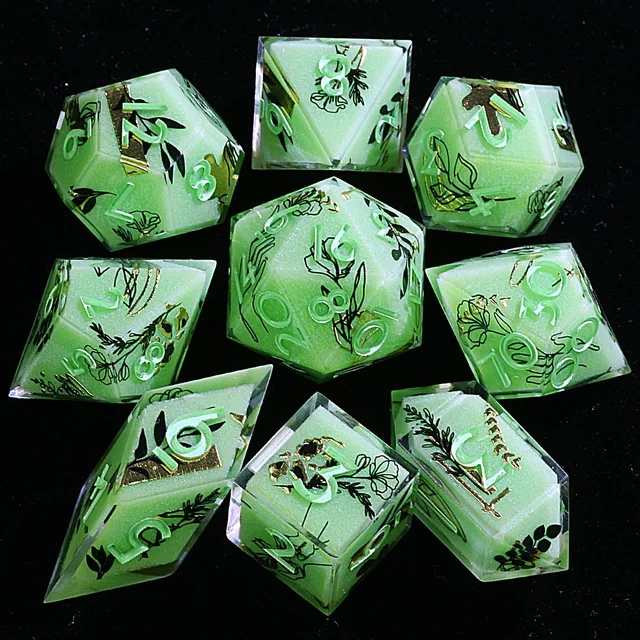
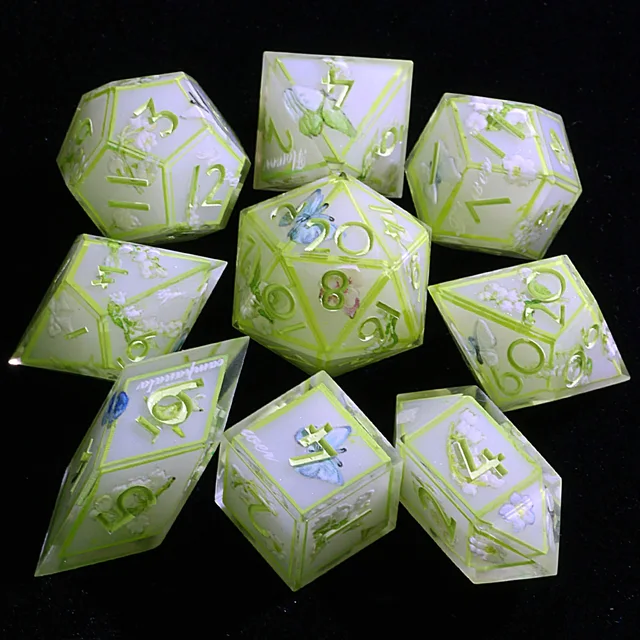
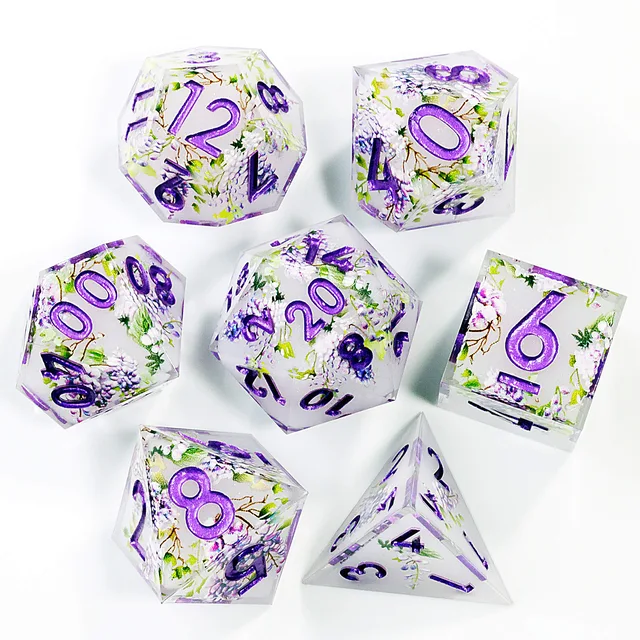
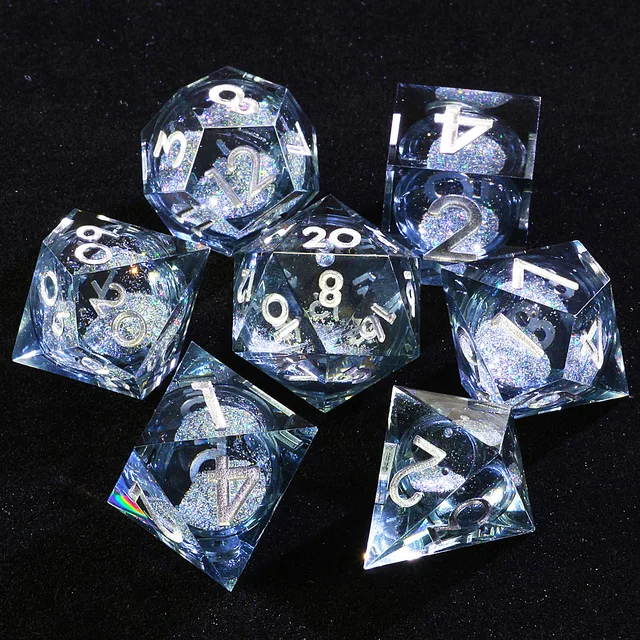
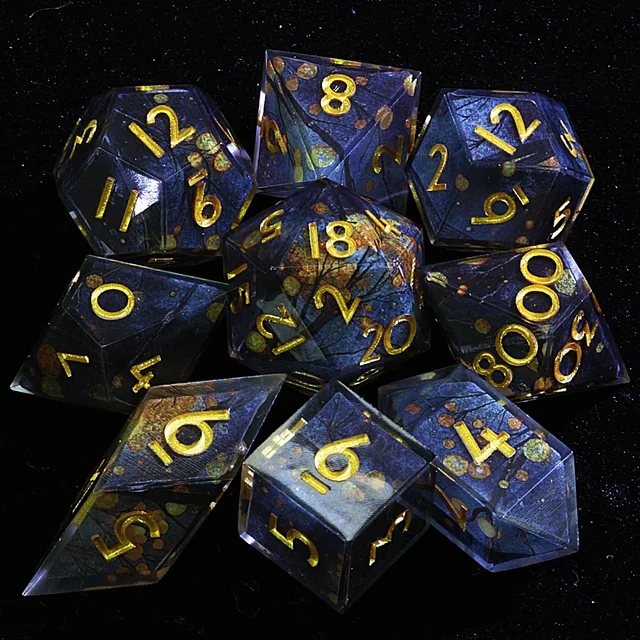
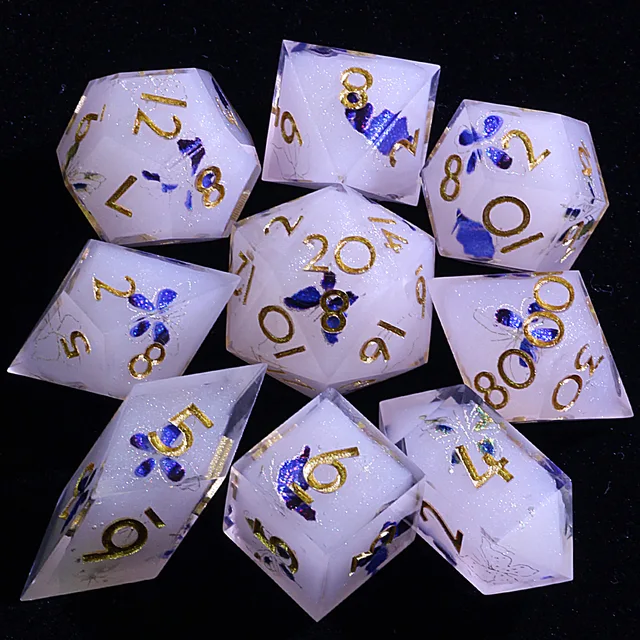
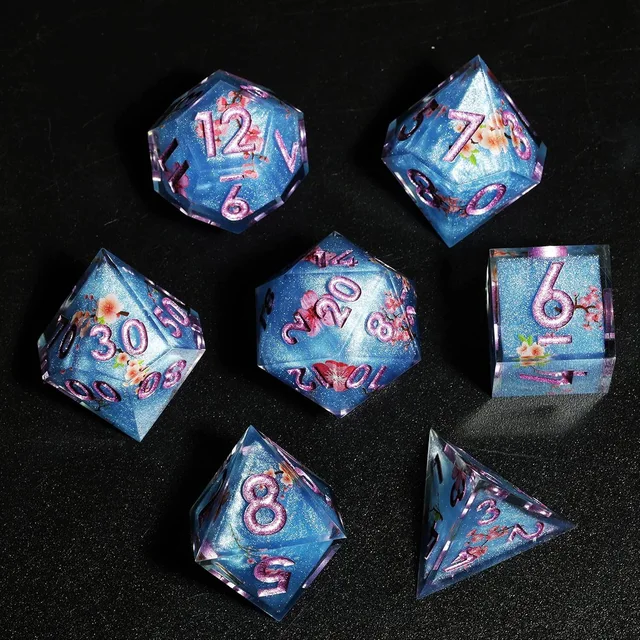
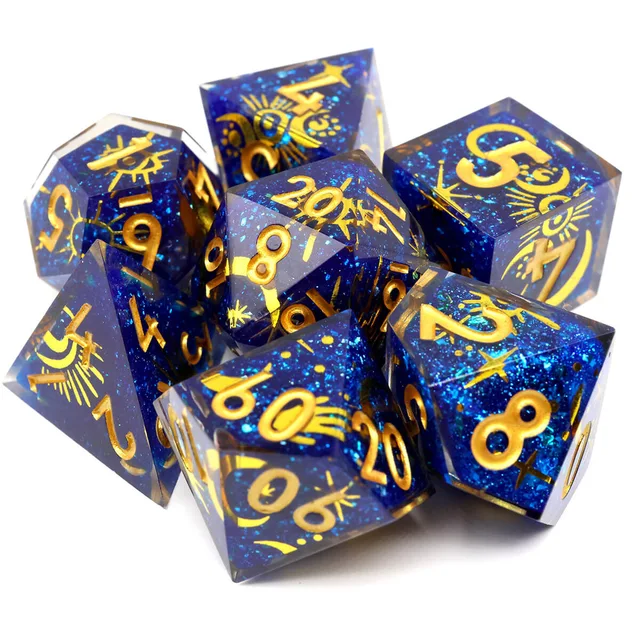
Start your DND Druid Class sheet with your spell save DC, spell attack bonus, Wild Shape uses and the CR limit at your level. Write a concentration reminder beside each spell that needs one. Give the DM a sentence they can use tonight, such as “I know who built this fish weir, and she'd never leave it broken.” Print the Druid character sheet, keep your beast cards with it, and visit our Druid dice collection when you need dice for the trail.
Rules summaries draw on the System Reference Document 5.2.1 by Wizards of the Coast LLC, licensed under CC BY 4.0. Builds and play examples are DND Den editorial work.