
The observatory dome is stuck. The aurora will spell out the missing queen's name for exactly one round, and a brass custodian stands between your astronomer and the telescope. Your Monk could spend the whole turn trading blows with it. Or you could crank the dome open, slip the astronomer past the custodian, and let someone finally read the sky. The pleasure of the DND Monk Class is how often you get that second choice.
This guide uses the 2024 Player’s Handbook. You’ll find a first-session routine, two builds you can take to level 5, and a separate 2014 comparison for older tables. If you’re still picking your character’s job, our guide to the D&D classes compares the Monk with its neighbours.
What does a Monk do well?
A Monk is a mobile martial character who can turn one awkward square on the battle map into a solution. You can reach a door, deliver an item or join an isolated party member, often with enough of your turn left to help. You have a d8 Hit Point Die. Standing beside the toughest enemy and inviting every attack can spend that modest supply of Hit Points quickly.
Before your turn, ask the player who goes next what they need. The Barbarian may love a Prone target. The archer shooting from the far balcony may urgently prefer that it stays upright. A healer trapped on the wrong side of the room might value a clear route more than either. Your speed becomes a party resource the instant you know where you’re going.
Build your first Monk on one sheet
Start with Dexterity for your attacks and Wisdom for your class abilities. While you wear no armour and wield no Shield, your Armor Class is 10 plus both modifiers. Two 16s give AC 16 with no equipment purchase. Constitution is a good third score. You begin with 8 plus your Constitution modifier in Hit Points, and proficiency in Strength and Dexterity saving throws.
Leave a space by your bonus action for “one Unarmed Strike.” Martial Arts already gives you this option at level 1. Put an actual d6 beside it. At level 2, place two counters next to the die for Focus Points. When a new player picks up the die and leaves the counters alone, they can immediately see that ordinary Martial Arts costs nothing. The Monk character sheet gives you somewhere to keep those numbers between sessions.
Monk weapons include Simple Melee weapons and Martial Melee weapons with the Light property. A Quarterstaff qualifies, and its Versatile property lets you roll its normal d8 damage die when you use two hands. Your Martial Arts die is an option. At level 1 it’s a d6, so keep the staff’s d8 for that two-handed attack. Martial Arts applies when you’re unarmoured, shieldless, and unarmed or wielding only Monk weapons. The 2024 Monk class table shows when the class die improves.
Which bonus action should you take?
At level 2 you get one Focus Point per Monk level and recover the whole pool on a Short or Long Rest. You still have one bonus action each turn. Pick the outcome you need before choosing whether it’s worth a point.
- Land another hit. Your free Martial Arts bonus action gives you one Unarmed Strike. Flurry of Blows costs one Focus Point and gives you two instead. In the 2024 rules, either works even if you used your action for something other than attacking.
- Get clear. Patient Defense lets you Disengage as a bonus action for free. Spending one point gives you both Disengage and Dodge. Pay when getting away from one creature still leaves you exposed to others.
- Get there. Step of the Wind gives you a free bonus-action Dash. Pay one point if you also need to Disengage and want double jump distance for the turn. Check the distance on the map first. Sometimes your increased walking speed is already enough.
Imagine you have two points left and the party has plenty of time before its next Short Rest. Spending both in an important scene is reasonable. In a timed escape, one in reserve buys useful choices in the next room. Once per Long Rest, Uncanny Metabolism lets you recover all expended Focus Points when rolling Initiative and regain Hit Points equal to your Monk level plus a Martial Arts die roll. Decide then. It isn’t a refill you can claim halfway through round three.
Level milestones worth putting on the character sheet
- Level 3, Deflect Attacks and a subclass. Use your Reaction against a qualifying attack roll that hits you and deals Bludgeoning, Piercing or Slashing damage. Reduce its total damage by 1d10 plus Dexterity modifier plus Monk level. Reducing it to zero can open a one-point redirection. The initial reduction is free.
- Levels 4 and 5, a feat and a second attack. Level 4 offers a feat and Slow Fall, a Reaction that reduces falling damage. At level 5 your class die becomes a d8, Extra Attack gives you two attacks with the Attack action, and Stunning Strike comes online.
- Levels 7 and 9, room to explore. Evasion helps with effects that offer a Dexterity save for half damage. Acrobatic Movement at level 9 lets you travel across liquids or up vertical surfaces during your movement. Arrange a landing place before the movement ends.
- Levels 10 and beyond. Heightened Focus brings Flurry to three Unarmed Strikes at level 10. Your class die rises to a d10 at level 11 and a d12 at level 17. At level 13 Deflect Energy broadens Deflect Attacks to attacks dealing any damage type.
At level 5, Stunning Strike costs one point after you hit with a Monk weapon or Unarmed Strike. Use it once per turn. On a failed Constitution save, the target is Stunned until the start of your next turn. On a success, its Speed is halved until then, and the next attack roll against it before then has Advantage. Tell the next player when that Advantage is still available. Your own follow-up attack can also use it.
Choose a Monk subclass for the moments you enjoy
Warrior of the Open Hand gives Flurry hits a purpose beyond damage. Choose Addle to prevent the target’s Opportunity Attacks until the start of its next turn. Push can move it up to 15 feet on a failed Strength save, while Topple makes it Prone on a failed Dexterity save. Each option rewards a quick glance at the turn order. Addle is particularly handy when an ally is waiting to walk away.
Warrior of Shadow suits a player who likes plotting a route through dimly lit rooms and setting up escapes. The subclass can see through the Darkness it casts with Shadow Arts. Your companions ordinarily can’t. Agree where to put that darkness before you obscure the one target your Wizard can currently see.
Warrior of Mercy mixes the Monk’s speed with healing. It’s a good fit for the player who notices the ally on the far side of the map losing Hit Points. Warrior of the Elements can extend the reach of Unarmed Strikes and change their damage type with Elemental Attunement. Pick it if you like making good use of odd spaces on a map. The publisher’s overview of the revised Monk subclasses covers all four.
Two DND Monk Class builds you can take straight to the table
The observatory runner, an Open Hand courier
This Wayfarer used to carry messages between rival astronomers who refused to be seen speaking. Use the standard array. Start with Strength 10, Dexterity 15, Constitution 13, Intelligence 8, Wisdom 14 and Charisma 12. Add 1 Dexterity and 2 Wisdom from Wayfarer for 16 in each. Start at AC 16 and 9 Hit Points. Wayfarer supplies Insight, Stealth and the Lucky Origin feat. Choose Acrobatics and Athletics as your Monk skills.
Take Open Hand at level 3. At level 4, use Ability Score Improvement to raise Dexterity to 18. At level 5 that gives AC 17, +7 to hit with a Dexterity-based Monk attack, and 1d8 + 4 damage with a damaging Unarmed Strike. Your Focus save DC is 14. Between encounters, ask which astronomer is lying about the broken telescope. Insight gives your courier a reason to stay involved once everyone puts their dice down.
The lantern guide, a Shadow explorer
This Guide charts the safe passages through a city where every streetlight extinguishes at midnight. Start with Strength 8, Dexterity 14, Constitution 13, Intelligence 12, Wisdom 15 and Charisma 10. Add 2 Dexterity and 1 Wisdom from Guide to get two 16s. Guide brings Stealth, Survival and Magic Initiate (Druid). Choose Insight and Acrobatics as your Monk skills. Pick Wisdom for your feat spells, take Guidance and Druidcraft, and learn Longstrider for the one free casting per Long Rest.
Choose Shadow at level 3 and raise Wisdom to 18 at level 4. By level 5, you have AC 17, +6 to hit and a Focus save DC of 15. Longstrider gives a creature 10 extra feet of Speed for an hour without Concentration. Cast it on the party member escorting the mapmaker if your own movement is ample. For the backgrounds and their starting choices, see the official background overview.
A worked turn at the observatory
Our level 5 Open Hand courier has five Focus Points. The DM says opening the jammed dome takes the Utilize action. The custodian stands within reach of the crank, and the astronomer acts immediately after you. Walk to the crank and use your action. You still have your bonus action. Spend one point for Flurry, roll two Unarmed Strikes, and suppose the first hits. Choose Addle. Even if the second misses, the custodian can’t make an Opportunity Attack when the astronomer passes it before its next turn. The dome is open, and you finish with four points.
What if both strikes miss? You’ve spent the point and opened the dome. Tell the astronomer the route is still contested so they can decide whether to Disengage. If another hero had taken the crank, you could have taken one Attack action and attacked twice through Extra Attack and added two Flurry strikes. You couldn’t have done all four attacks and worked the crank on that same ordinary turn. That trade is what makes the courier’s choice interesting.
Using the 2014 Monk at a legacy table
The 2014 Monk starts with a d4 Martial Arts die and calls its level 2 resource ki. Its Martial Arts bonus strike requires the Attack action with an Unarmed Strike or Monk weapon. Its Flurry follows the Attack action, so the crank trick above belongs to the revised class. The older Deflect Missiles applies to ranged weapon attacks. Older Stunning Strike also has different timing and no once-per-turn limit. Keep one edition’s feature text handy during play. Our 2014 character creator and 2024 character creator have separate starting points.
DND Monk Class FAQ
Can I use Flurry of Blows and my free bonus strike together?
Each requires your bonus action, and you get one per turn. At level 5, the usual 2024 total is three attacks with Extra Attack and the free strike, or four if you spend Focus for Flurry. Roll each separately so you can decide what to do after each result.
Can I use my staff for both Flurry attacks?
Flurry specifies Unarmed Strikes. You can hold the staff while making them, and you can use the staff for attacks from your Attack action. A magic bonus that applies to attacks made with the staff doesn’t transfer to your Unarmed Strikes.
Does a Monk grapple with Dexterity or Wisdom?
Under 2024 Martial Arts you can use Dexterity in place of Strength for the save DC of a Grapple or Shove made with your Unarmed Strike. The target chooses a Strength or Dexterity save. For the level 5 courier that DC is 15. The same character’s Stunning Strike uses Wisdom, giving DC 14. Write both on your sheet.
Is a Monk a good first D&D character?
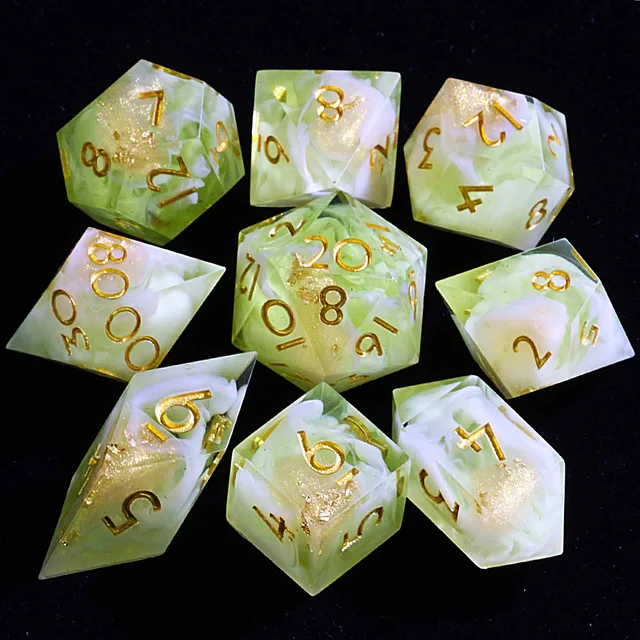
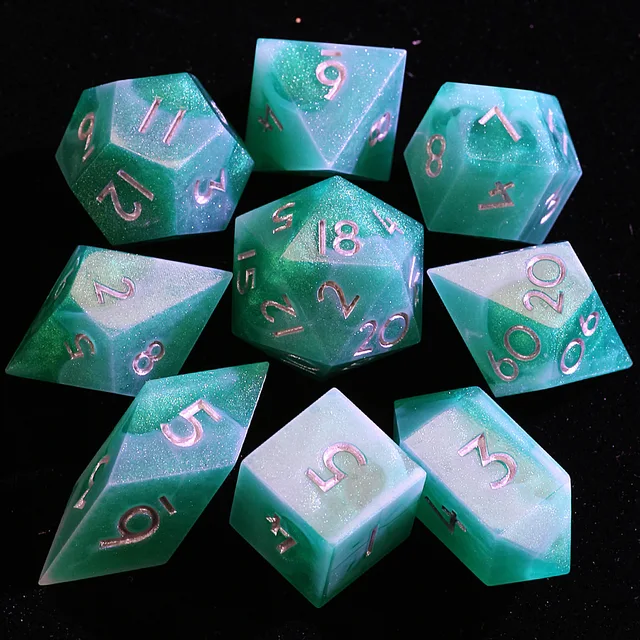
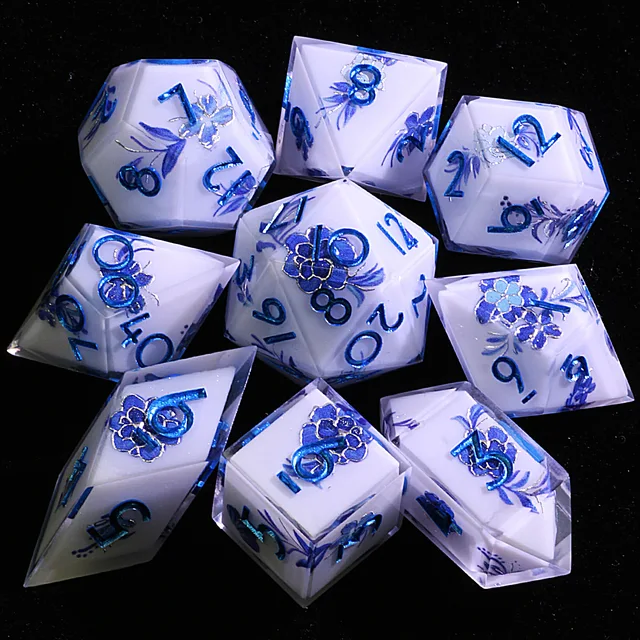
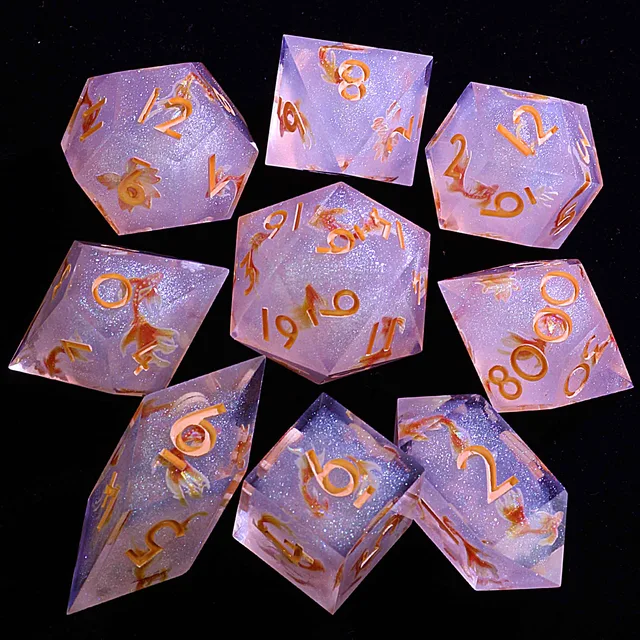
Yes, particularly if you like deciding where to go each turn. Start with a staff, your free strike and one reason your character travelled with this party. Add Focus options as you gain them. If you’d rather learn a character built around one especially important hit, compare the Rogue guide. Once you’ve picked the DND Monk Class, the character creation walkthrough can take you from that idea to a finished sheet. For dice to go with it, explore the Monk collection.
This work includes material from the System Reference Document 5.2.1 (“SRD 5.2.1”) by Wizards of the Coast LLC, available at the official SRD page. The SRD 5.2.1 is licensed under the Creative Commons Attribution 4.0 International License. Rules summaries are adapted. Builds and play examples are original DND Den editorial material.