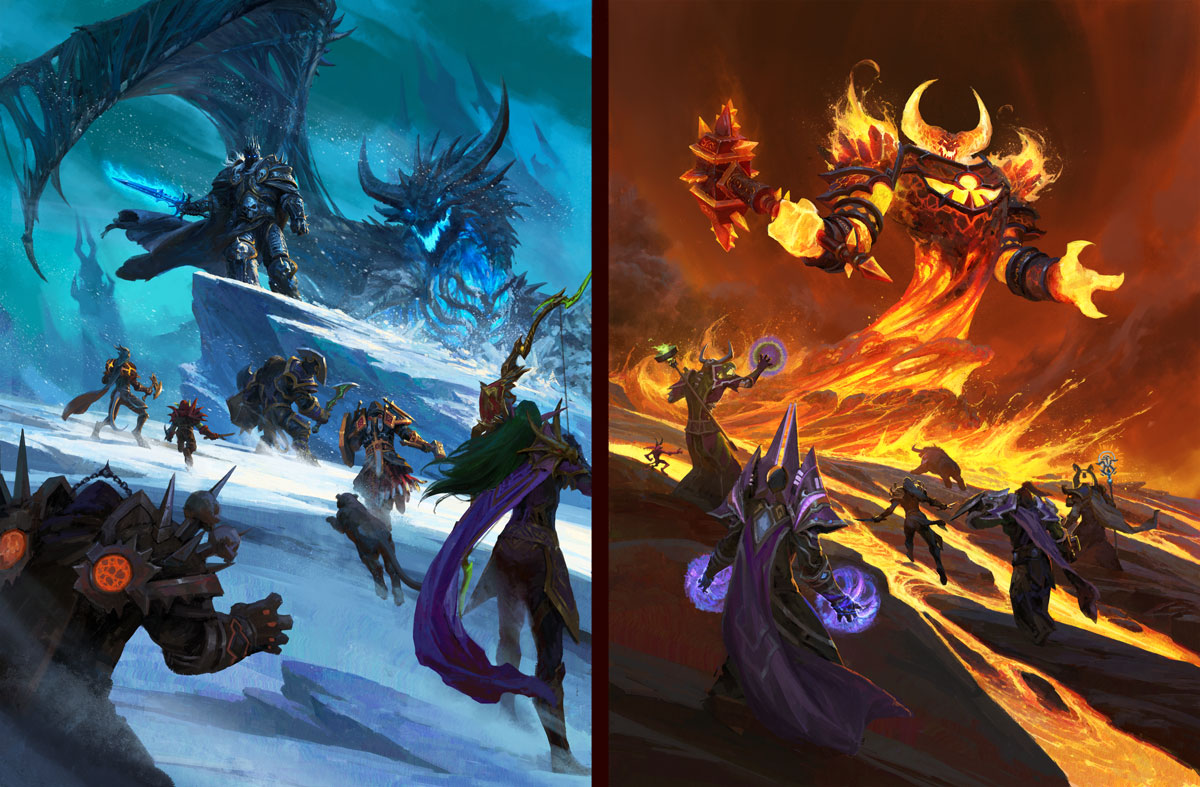
Your next D&D character could be a draenei exile, a Gilnean worgen or a dracthyr discovering a world that has moved on without them. D&D: World of Warcraft brings 16 playable species to Azeroth campaigns: 11 new options and five adaptations of existing D&D species. Here is how to choose a people, a lineage and a character worth adventuring with.
By Luke Grayson and Erin Sullivan. We cover the complete announced roster, species traits, lineage spell tables, starting Renown and verified core-rule foundations, and ideas for bringing a Warcraft character to the table. If you are searching for “World of Warcraft D&D races,” you are in the right place: species is the term used in the revised tabletop rules.
Updated 29 October 2026. The Warcraft-specific traits, lineages and Renown details below are rewritten from the pre-release species report. The official D&D reveal confirms the roster and lore; shared core rules are also checked against SRD 5.2.1. This is preview coverage: the published expansion takes precedence if its final wording differs.
All 16 World of Warcraft D&D species at a glance
The official gameplay expansion listing identifies the following roster. The character hooks are our suggestions, not restrictions or rankings. Choose a concept you want to inhabit before worrying about the strongest combination.
| Species | Expansion status | A character hook to explore |
|---|---|---|
| Dracthyr | New | A former soldier deciding what freedom means |
| Draenei | New | An exile preserving something precious from home |
| Dwarf | Adapted | A clan envoy with an inconvenient personal ambition |
| Earthen | New | A living-stone explorer choosing a purpose |
| Elf | Adapted | An heir to a magical tradition they question |
| Forsaken | New | An independent undead person rebuilding a life |
| Goblin | Adapted | An inventor whose favourite creation actually helps people |
| Haranir | New | A guardian encountering the surface world |
| Human | Adapted | A sailor, scholar or soldier shaped by a particular homeland |
| Mechagnome | New | A tinkerer balancing improvement with identity |
| Orc | Adapted | A champion deciding which traditions to carry forward |
| Pandaren | New | A thoughtful traveller with a reason to leave comfort behind |
| Tauren | New | A gentle protector who knows when to stand firm |
| Troll | New | A devotee negotiating responsibility, faith and ambition |
| Vulpera | New | A resourceful caravan scout with friends everywhere |
| Worgen | New | A Gilnean whose manners conceal a dangerous transformation |
Why do some lists say Gnome? The official species article uses a Gnome heading when discussing their history, while the product listing names Mechagnome among the eleven new options. Ordinary gnomes already exist in D&D. Counting gnomes and mechagnomes as two additional new entries would misrepresent the advertised sixteen.
Races, species, lineages and factions: what changes?
These choices answer different questions. Your species provides a set of game traits. A lineage, when the rules offer one, selects a branch of those traits. Your culture or homeland explains where you grew up. Your class describes the abilities you develop as an adventurer. Your faction relationships describe who trusts you, who expects something from you and where your loyalties lie.
A clan, cartel, military unit or philosophy is not automatically a mechanical subrace. Likewise, belonging to the Alliance or Horde does not tell the table everything about a character’s personality. An orc scholar and an orc veteran can share a species while approaching the same problem very differently.
For the general terminology, see our D&D races and species guide. For the edition question, our 2024 versus 2014 rules comparison explains why older ability-score bonuses and newer background choices should not be mixed casually.
How to read the species traits
Each entry separates the character’s basic statistics, special traits and cultural or lineage choices. Proficiency Bonus scales with character level. A feature that refreshes on a Short Rest is available more often than one requiring a Long Rest; record both its action cost and its recharge. Character level means your total level across classes, unless a rule says otherwise.
The illustrated entries below retain the named abilities, numbers and restrictions from the cited preview while explaining them in our own words. Warcraft culture supplies the background; your class, choices and relationships make the character your own.
Dracthyr: a purpose beyond your orders
Dracthyr were created by Neltharion, the Earth-Warder, by combining draconic power with mortal adaptability. Their natural form and humanoid visage give you two ways to express the same identity. Blizzard’s dracthyr introduction offers useful visual inspiration: scales, horns, colouring and visage details can all tell part of your character’s story.
The D&D species reveal places their stasis at nearly twenty millennia. That makes unfamiliar customs, changed loyalties and lost context useful story material. A dracthyr does not need to be clueless: they can be highly capable while discovering that the purpose they were made for no longer answers the question of how to live.
Our character idea: a meticulous former scout who now records beautiful, entirely nonstrategic things. Their first personal ambition is to map a place because they want to see it.
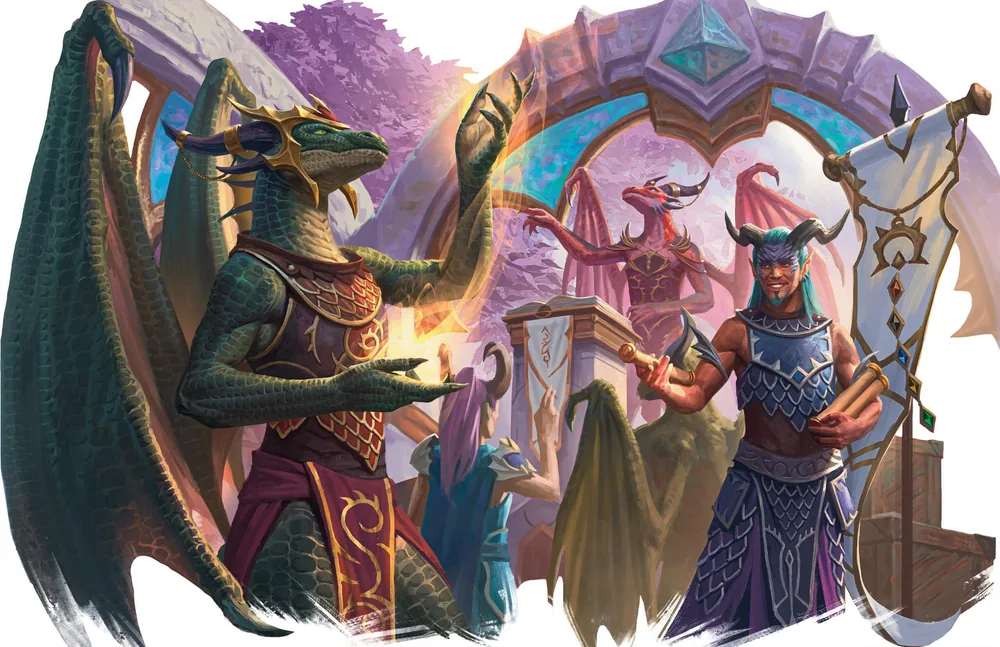
Dracthyr traits
- Creature Type: Dragon.
- Size: Medium, approximately 7 feet tall.
- Speed: 30 feet.
- Darkvision. Your Darkvision extends to 60 feet.
- Gliding Wings. In your natural form, provided you are not Incapacitated, reduce the distance used to calculate falling damage by up to 100 feet. As you descend, you may travel horizontally up to 2 feet for each 1 foot you fall.
- Natural Weaponry. While in natural form, a Bonus Action lets you use your wings or tail to make an Unarmed Strike for its Shove option against a creature.
- Visage. Spend a Magic action to change between your natural form and your humanoid visage. Choose the visage’s appearance when selecting the species, including its coloration, height, weight, hair and sex. The transformation leaves your clothing, equipment and game statistics unchanged.
- Draconic Flight. From character level 5, use a Bonus Action to take flight with the wings of your natural form. For 10 minutes, your Fly Speed equals your Speed. After using this feature, finish a Long Rest before using it again.
At the table: gliding and powered flight are different abilities. Gliding trades height for movement; the level-5 feature provides a Fly Speed for a limited period. A humanoid-looking visage also leaves the character’s Dragon creature type unchanged, so read a spell’s target requirements rather than deciding by appearance.
Dracthyr weyrns and Renown
The species preview describes five weyrns, or military divisions:
- Adamant Vigil: intelligence gatherers serving the black dragonflight.
- Dark Talons: a strike force allied with the Horde.
- Ebon Scales: rebels working to awaken dormant dracthyr.
- Healing Wings: healers supporting the dragonflights in the Dragon Isles.
- Obsidian Warders: defenders who joined the Alliance.
Starting Renown: Dark Talons begin with Horde Renown 3; Obsidian Warders begin with Alliance Renown 3. The other three weyrns start with Valdrakken Accord Renown 3.
Draenei: what an exile chooses to preserve
Draenei history gives a character room for faith, grief, craftsmanship and renewal. Blizzard describes exiles fleeing the Burning Legion and finding allies on Azeroth. Their association with jewelcrafting is an excellent story hook for an artisan, but it does not by itself grant a D&D tool bonus.
Lightforged draenei add another perspective: veterans of the Army of the Light undergo a ritual that infuses them with holy power. The official allied-race introduction explains that identity.
Our character idea: a travelling lapidary who repairs heirlooms for displaced families. An ordinary commission draws them into the party’s much less ordinary troubles.
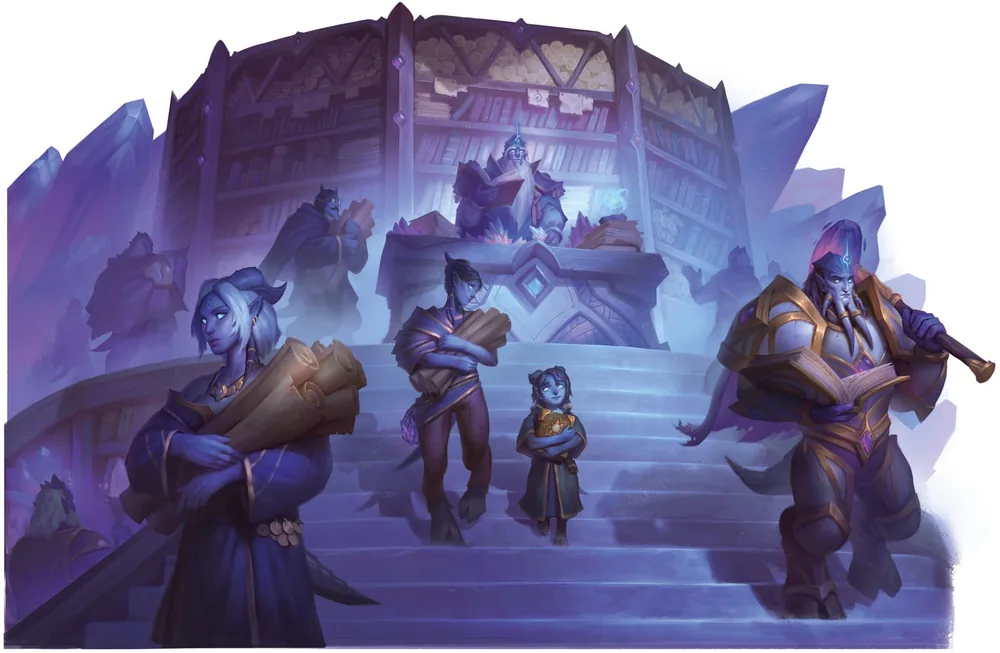
Draenei traits
Creature Type: Humanoid. Size: Medium, typically over 7 feet tall. Speed: 30 feet.
- Darkvision. Your range is 60 feet.
- Eredar Lineage. Select a lineage and take its level-1 benefits from the table below. Its additional spells become available at character levels 3 and 5. Those spells remain prepared; each has one casting without a spell slot per Long Rest, and you may also cast it with a spell slot of the appropriate level. When selecting the lineage, choose Intelligence, Wisdom or Charisma as the spellcasting ability for its spells.
- Heroic Presence. Casting a spell supplied by your Eredar Lineage gives you Heroic Inspiration if you do not already have it. After this benefit triggers, it is unavailable until you complete a Short or Long Rest.
Draenei lineages
The four Eredar lineages have different histories as well as different rules. Draenei follow Velen and established a home on Azeroth without joining the Burning Legion. Krokul, also called the Broken, were changed by demonic magic; their communities include survivors on Argus, Outland and Azeroth. Lightforged draenei are Army of the Light veterans transformed by holy energy. Man’ari Eredar joined the Legion and became demons; the repentant Penitents now cooperate with Alliance draenei.
| Lineage | Level 1 | Level 3 spell | Level 5 spell |
|---|---|---|---|
| Draenei | Resistance to Necrotic damage; Spare the Dying cantrip | Healing Word | Prayer of Healing |
| Krokul | Resistance to Poison damage; Poison Spray cantrip | Ray of Sickness | Hold Person |
| Lightforged | Resistance to Radiant damage; Sacred Flame cantrip | Guiding Bolt | Aid |
| Man’ari | Resistance to Fire damage; Fire Bolt cantrip | Hellish Rebuke | Darkness |
Draenei Renown
Draenei and Lightforged characters begin with a Renown Score of 3 with the Exodar (Alliance). Krokul and Man’ari characters receive no starting Renown Score.
Dwarf: choose a clan, then an individual
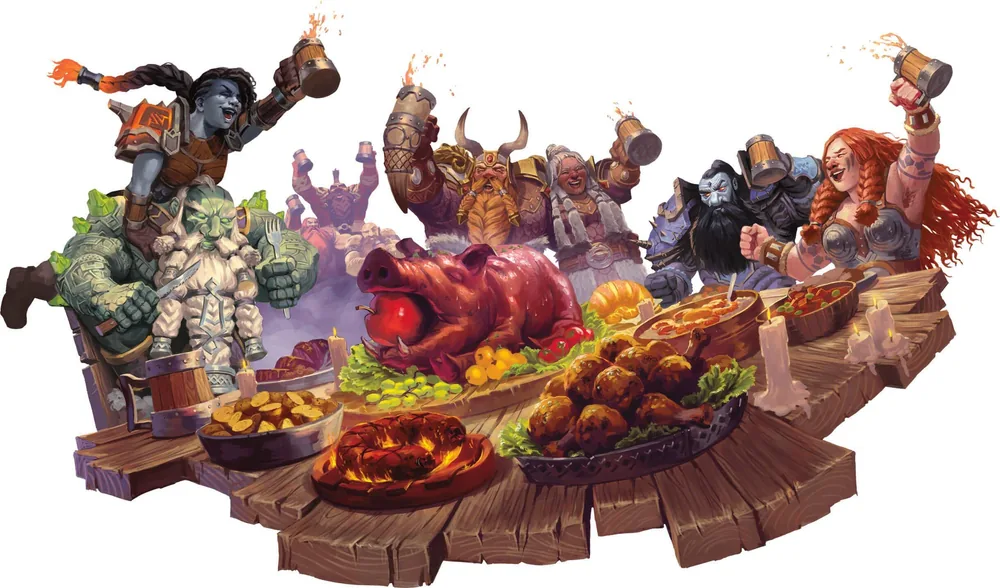
Bronzebeard, Wildhammer and Dark Iron traditions make Azeroth’s dwarves more varied than a single mountain stereotype. Blizzard’s Council of Three Hammers story, Fire and Iron, explores the uneasy relationships around Ironforge. Wildhammer gryphon traditions and Dark Iron craftsmanship give you different starting points for appearance and personal history.
Our character idea: a clan representative who is excellent at negotiating and hopeless at hiding how badly they want an adventure. Their responsibilities keep following them into taverns, ruins and diplomatic disasters.
Dwarf traits
Use the Dwarf species traits from the 2024 Player’s Handbook. Creature Type: Humanoid. Size: Medium, approximately 4–5 feet tall. Speed: 30 feet.
- Darkvision. Your range is 120 feet.
- Dwarven Resilience. You resist Poison damage. Saving throws made to prevent or remove the Poisoned condition have Advantage.
- Dwarven Toughness. Add 1 to your Hit Point maximum when you gain this trait, then increase that maximum by another 1 whenever you gain a level.
- Stonecunning. Spend a Bonus Action to gain Tremorsense out to 60 feet for 10 minutes. The sense works while you stand on or otherwise touch stone, whether natural or worked. You have a number of uses equal to your Proficiency Bonus, restored by a Long Rest.
Dwarf clans and Renown
Choose a clan as part of your character’s origin. All four choices begin with a Renown Score of 3 with Ironforge (Alliance).
- Bronzebeard. Ironforge’s largest clan anchors its military and commerce. Its dynasty ruled for more than 250 years before Magni Bronzebeard became living crystal during the Cataclysm.
- Dark Iron. Exiled after the War of the Three Hammers, the clan suffered centuries under Ragnaros after its king summoned him. Following the fire lord’s defeat, the Dark Irons returned to Ironforge under Queen-Regent Moira Thaurissan and joined the Alliance.
- Frostborn. These Northrend dwarves descend from a separate earthen population. They did not found Ironforge, but regard its clans as cousins.
- Wildhammer. A Dark Iron curse forced this clan from Grim Batol. After settling at Aerie Peak in the Hinterlands, its people became renowned for gryphons used in travel and warfare.
Earthen: living stone, chosen purpose
Earthen are their own option, not simply dwarves with a stone cosmetic effect. Blizzard’s War Within introduction describes titan-forged inhabitants of Khaz Algar with a distinct culture and gem-studded bodies. Stone colour, embedded gems and carved details can make a character immediately recognisable.
Our character idea: an archivist who has started collecting experiences that cannot be catalogued properly: a terrible joke, a favourite meal shared with friends, the sound of a city waking. The character’s arc is about choosing what matters, not learning to imitate someone else.
Earthen traits
Creature Type: Humanoid. Size: Medium, approximately 4–5 feet tall. Speed: 30 feet.
- Azerite Surge. During the Attack action, replace one of your attacks with a 15-foot Cone of Azerite energy. Choose which creatures in the Cone receive healing: each regains 1d10 Hit Points. Every other creature in the area makes a Dexterity saving throw against DC 8 + your Constitution modifier + your Proficiency Bonus. A failed save causes 1d10 Radiant damage; a successful save halves that damage. Both the healing and damage increase with your level, as shown below. You can use the surge a number of times equal to your Proficiency Bonus per Long Rest.
- Darkvision. Your range is 120 feet.
- Earthen Resilience. You resist Poison damage and have Advantage on saves made to avoid or end the Poisoned condition.
- Ingest Minerals. Malnutrition cannot give you levels of Exhaustion.
- Quiet Contemplation. When spending Hit Point Dice during a Short Rest, recover 1 additional Hit Point for every die spent.
| Character level | Azerite Surge healing | Azerite Surge damage on a failed save |
|---|---|---|
| 1–4 | 1d10 Hit Points | 1d10 Radiant |
| 5–10 | 2d10 Hit Points | 2d10 Radiant |
| 11–16 | 3d10 Hit Points | 3d10 Radiant |
| 17+ | 4d10 Hit Points | 4d10 Radiant |
Earthen Renown
Earthen begin without a Renown Score. Their newly independent lives do not give them an established starting allegiance to either faction.
Elf: five traditions, very different identities
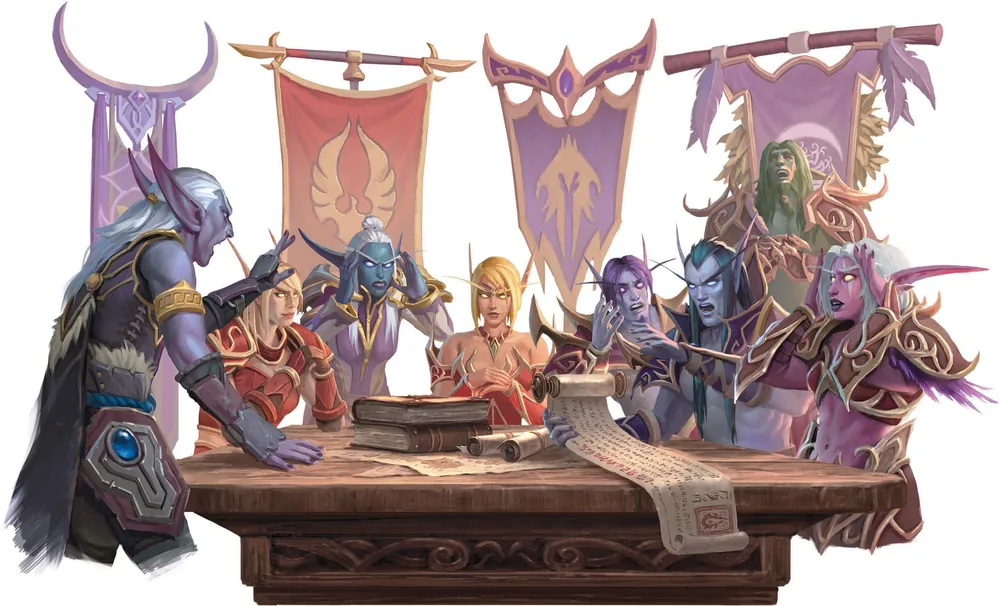
The official D&D preview identifies blood elves, night elves, high elves, nightborne and void elves. Think about the character’s relationship to magic and community before assigning a class. Blood elves carry the history of the Sunwell; night elves have strong druidic traditions; high elves have their own place among the wider peoples of Azeroth.
Blizzard’s allied-race introduction gives two useful contrasts. The nightborne were shaped by Suramar’s long isolation and the Nightwell. Void elves learn to manage the influence of dangerous power under Alleria’s guidance. These are different histories, not merely alternative spell colours.
Our character idea: an elf researcher who travels with a patient friend willing to interrupt an argument before it becomes a century-long feud. Choose the tradition that makes their questions interesting. Do not copy the ordinary High Elf spell list onto every Warcraft elf.
Elf traits
Start with the 2024 Player’s Handbook Elf traits, then use the appropriate Azeroth lineage. The four Warcraft choices below replace the usual Drow, High Elf or Wood Elf selection; an Azeroth high elf instead uses the book’s standard High Elf option. Creature Type: Humanoid. Size: Medium, approximately 5–6 feet tall. Speed: 30 feet.
- Darkvision. Your initial range is 60 feet; some lineages extend it.
- Elven Lineage. Take the level-1 benefits for your choice. At character levels 3 and 5, you gain its listed spells and keep them prepared. Each can be cast once per Long Rest without spending a spell slot, or with a spell slot of the appropriate level. Choose Intelligence, Wisdom or Charisma for your lineage spellcasting when you select the lineage.
- Fey Ancestry. Saving throws to avoid or end the Charmed condition have Advantage.
- Keen Senses. Choose proficiency in Insight, Perception or Survival.
- Trance. You do not need sleep, and magic cannot put you to sleep. Four hours of conscious, trancelike meditation can complete your Long Rest.
Elf lineages
| Lineage | Level 1 | Level 3 spell | Level 5 spell |
|---|---|---|---|
| Blood Elf | Prestidigitation; after a Long Rest, you may replace it with a different Wizard cantrip | Detect Magic | Arcane Vigor |
| Night Elf | Stealth proficiency; you may Hide as a Bonus Action while in Dim Light or Darkness | Longstrider | Pass Without Trace |
| Nightborne | Darkvision extends to 120 feet; Arcane Pulse cantrip | Faerie Fire | Darkness |
| Void Elf | Darkvision extends to 120 feet; Mind Sliver cantrip | Entropic Embrace | Misty Step |
| High Elf — core 2024 option | Prestidigitation; after a Long Rest, you may replace it with a different Wizard cantrip | Detect Magic | Misty Step |
The High Elf row preserves the core option described in SRD 5.2.1. It is an alternative to a Warcraft lineage, not an extra package to add to one.
Elf lineage spells: Arcane Pulse and Entropic Embrace
- Arcane Pulse — Nightborne Evocation cantrip. Use an action to release arcane energy in a 10-foot Emanation. Choose the creatures affected within it; each makes a Constitution saving throw. On a failure, a creature takes 1d8 Force damage and has its Speed reduced by 10 feet until the end of your next turn.
- Entropic Embrace — Void Elf level-1 Necromancy spell. You can cast this as a Reaction when you make a D20 Test with Advantage or Disadvantage and both dice show the same number. Shadow surrounds you for 1 minute. During that time, you automatically succeed on Constitution saving throws to maintain Concentration, and your space is Lightly Obscured. Once per turn, choose one of the spell’s extra effects: deal an additional 1d4 Necrotic damage to a creature you damage, or restore an additional 1d4 Hit Points to a creature you heal. For each spell-slot level above 1, increase that bonus by another 1d4.
Elf Renown
| Elven people | Starting Renown |
|---|---|
| Blood Elf or Nightborne | 3 with Silvermoon City (Horde) |
| Night Elf or Void Elf | 3 with Darnassus (Alliance) |
| High Elf | No starting Renown Score |
Forsaken: independence after undeath
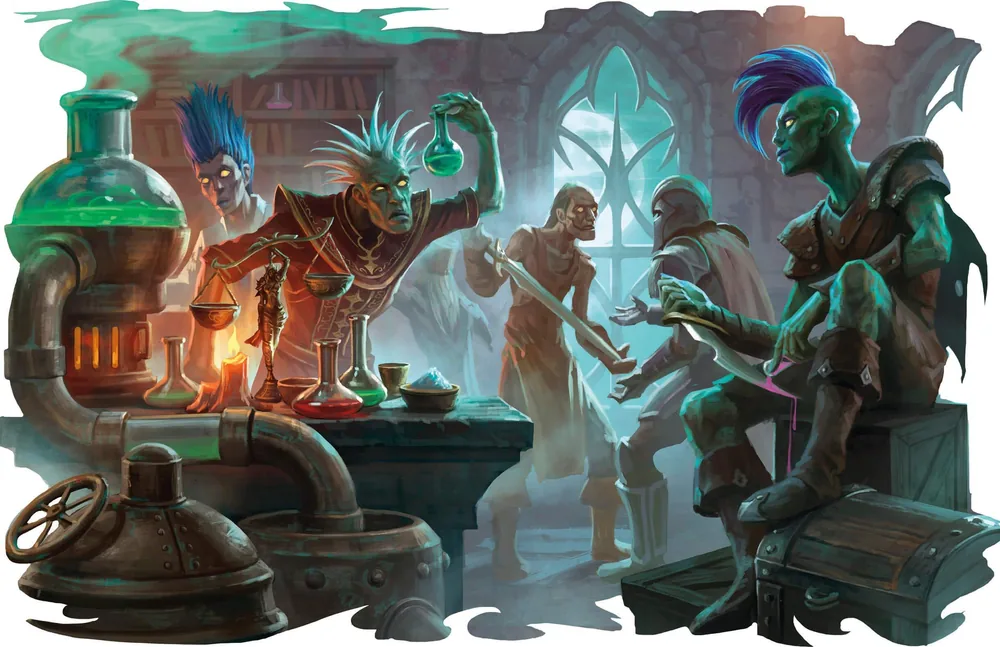
Forsaken characters start with an unusually strong question: what do you do with freedom after someone has taken it from you? Blizzard’s introduction to the original peoples of Warcraft describes undead who escaped the Lich King’s control and struggle for a place in the world.
Our character idea: a former village physician trying to help communities that are initially frightened of them. Let individual relationships complicate those first impressions. Being undead should give the player interesting situations, not permission to ignore everyone else’s comfort.
Forsaken traits
Creature Type: Undead. Size: choose Medium, approximately 4–7 feet tall, or Small, approximately 2–4 feet tall, when selecting the species. Speed: 30 feet.
- Darkvision. Your range is 60 feet.
- Deathly Endurance. You resist Necrotic damage.
- Everlasting. Dehydration, malnutrition and suffocation cannot give you levels of Exhaustion. You do not need sleep, and magic cannot put you to sleep. To complete a Long Rest in 4 hours, stay inactive and motionless while remaining conscious.
- Touch of the Grave. Once per Long Rest, when you damage a creature, you may roll a number of d4s equal to your Proficiency Bonus and add their total as extra Necrotic damage. You regain Hit Points equal to the extra damage actually dealt.
- Will of the Forsaken. You have Advantage on saving throws made to prevent or end the Charmed or Frightened condition.
Forsaken Renown
Your starting Renown Score is 3 with the Undercity (Horde).
Gnome and Mechagnome: ingenuity with a personal cost
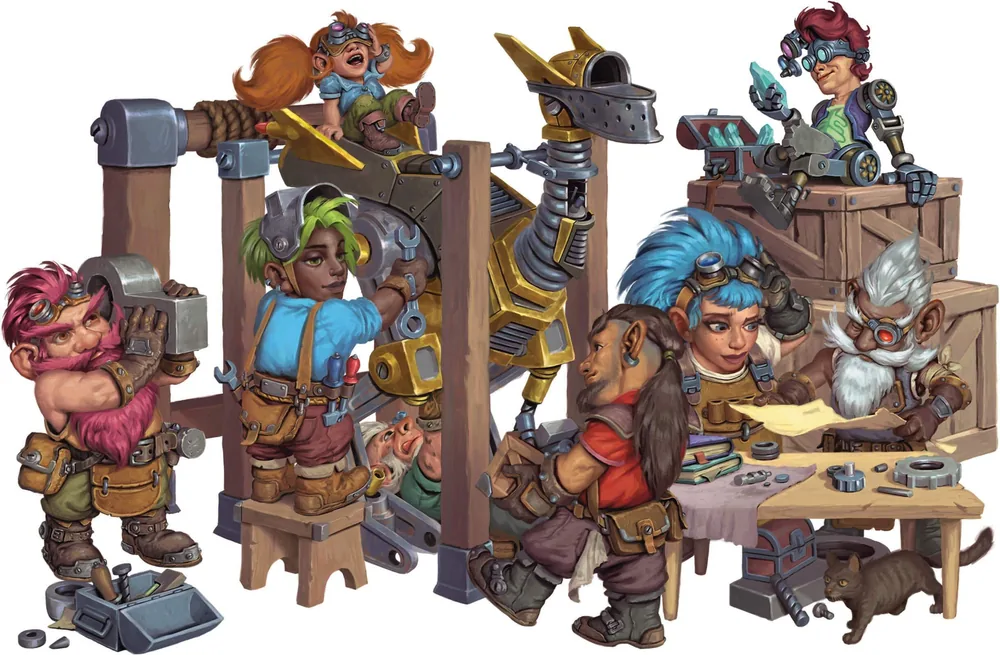
Blizzard’s Mechagnome preview describes modern people balancing flesh and mechanical augmentation after the struggle around Mechagon. Do not collapse that story into the history of their original mechanical ancestors. The distinction matters when describing whether a character chose an alteration, inherited it or is reconsidering it.
Our character idea: an enthusiastic repairer who believes every improvement should be reversible. They carry replacement parts for equipment, emergency comforts for friends and a notebook full of ideas that the party has politely vetoed.
Mechagnome traits
Creature Type: Construct. Size: Small, approximately 4 feet tall. Speed: 30 feet.
- Built for Success. After rolling a D20 Test, but before discovering its outcome, you may add 1d4 to the roll. You have a number of uses equal to your Proficiency Bonus, replenished by a Long Rest.
- Emergency Fail-Safe. When you become Bloodied, you may spend your Reaction and one Hit Point Die. Roll that die and regain Hit Points equal to its result plus your Constitution modifier, with a minimum recovery of 1. You can use the feature again after a Short or Long Rest.
- Mechanical Nature. You resist Poison damage and have Advantage on saving throws against gaining, or to end, the Paralyzed or Poisoned condition. Dehydration, malnutrition and suffocation cannot give you levels of Exhaustion.
- Sentry’s Rest. You do not need sleep. A Long Rest can take 6 hours if you spend that time inactive and motionless while remaining conscious.
- Specialized Design. Gain proficiency with two tools of your choice.
Ordinary gnomes and Mechagnome Renown
To play an ordinary Azeroth gnome, use the 2024 Player’s Handbook Gnome species with the Rock Gnome lineage. That choice uses a different trait package from the Construct option above; do not combine the two.
Both ordinary gnomes and mechagnomes start with a Renown Score of 3 with Gnomeregan (Alliance).
Ordinary Gnome and Rock Gnome traits
A core Gnome is a Small Humanoid with a 30-foot Speed and 60-foot Darkvision. Gnomish Cunning grants Advantage on Intelligence, Wisdom and Charisma saving throws. For Gnomish Lineage, the Rock Gnome option supplies Mending and Prestidigitation, using Intelligence, Wisdom or Charisma as selected.
A Rock Gnome can spend ten minutes using Prestidigitation to construct a Tiny clockwork device with AC 5 and one Hit Point. Choose one effect of that cantrip when making it; touching the device and spending a Bonus Action activates that effect. You can maintain up to three devices, each lasting eight hours unless dismantled earlier with a touch and the Utilize action.
That makes a small utility gadget, not an unrestricted invention system. It is also a different rules package from the new Mechagnome option.
Goblin: make the invention worth caring about
Blizzard’s Cataclysm introduction places the Bilgewater Cartel with the Horde and highlights goblin trade and invention. Engineering and explosive enthusiasm are recognisable starting points, but a goblin can care about safety, friends or a fair deal just as much as a dramatic profit margin.
Our character idea: an inventor building affordable tools for dangerous work. They are convinced their latest contraption will help the party. Whether it can survive being dropped down a mine shaft is a separate and increasingly urgent question.
Use the expansion’s playable option. A monster entry with a similar name is not a substitute for player-character rules.
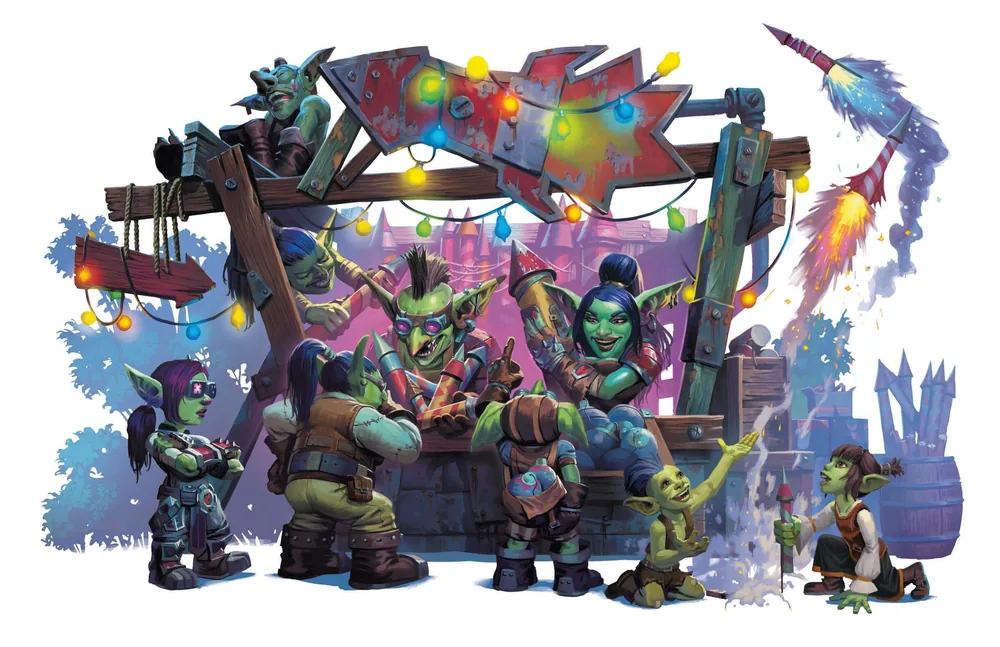
Goblin traits
Creature type: Humanoid. Size: Small, approximately 4 feet tall. Speed: 30 feet.
- Darkvision. Your Darkvision reaches 60 feet.
- Fey Ancestry. Saving throws made to prevent or end the Charmed condition have Advantage.
- Fury of the Small. When your attack or spell damages a creature larger than you, you can increase that damage by your Proficiency Bonus. The extra damage keeps the original damage type. You can apply this benefit only once per turn, with a total number of uses equal to your Proficiency Bonus; a Long Rest restores those uses.
- Nimble Escape. On each of your turns, you can use a Bonus Action to Disengage or Hide.
Goblin cartels and Renown
Choose a cartel when creating your goblin. These affiliations give your character a social starting point as well as a possible Renown score.
- Bilgewater Cartel. These goblins entered the Horde after their escape from Kezan and established themselves in Azshara.
- Blackwater Cartel. A pirate crew grew into the organisation controlling Booty Bay; smuggling and piracy remain part of its business.
- Steamwheedle Cartel. Based in Gadgetzan, these traders defend their neutrality and are willing to deal with paying customers from either side.
- Venture Company. Destructive mining and logging operations define this company, with illegal weapons trading and smuggling among its other activities.
Bilgewater characters begin with Renown 3 with the Bilgewater Cartel (Horde). Steamwheedle characters begin with Renown 3 with the Steamwheedle Cartel. Choosing Blackwater or the Venture Company grants no starting Renown score.
Haranir: a guardian beyond the roots
Haranir protect the Rootways in Harandar, a luminous subterranean environment connected with the World Trees. Blizzard’s Haranir introduction describes elders, guardians and the challenge of engaging with outsiders. Bioluminescent paint and the shapes of the underground jungle offer a vivid visual vocabulary.
Our character idea: a guardian investigating damage that begins far from the roots it eventually threatens. They need the party’s knowledge of the surface; the party needs their understanding of what lies below it. That creates cooperation without making the character an exposition machine.
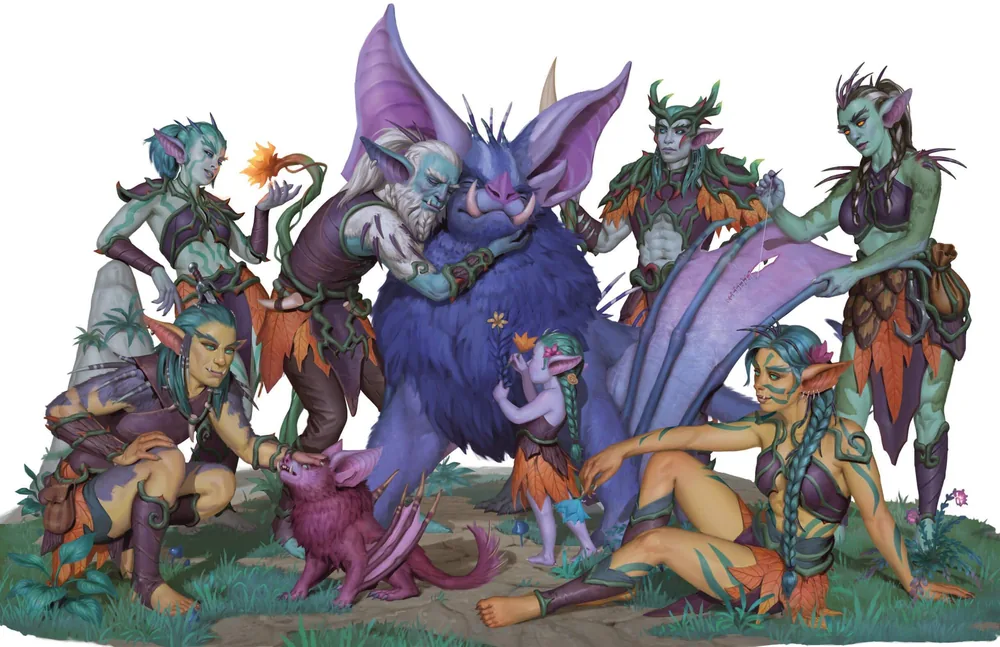
Haranir traits
Creature type: Humanoid. Size: Medium, approximately 7–8 feet tall. Speed: 30 feet.
- Darkvision. Your Darkvision extends to 120 feet.
- Gift of the World Trees. You are proficient in both Nature and Survival.
- Haranir Magic. You know the Druidcraft and Thorn Whip cantrips. At character level 3, Entangle becomes always prepared for you; at character level 5, the same applies to Spike Growth. Each of those levelled spells has one free casting per Long Rest, and you can also cast it with an appropriate spell slot. Choose Intelligence, Wisdom or Charisma as the spellcasting ability for this trait when you select Haranir.
Haranir Renown
Haranir begin with no starting Renown score, reflecting their long separation from Azeroth’s more widely connected societies.
Human: your homeland does the interesting work
A human character becomes more distinctive when “human” is followed by a place, a profession and a relationship. A Stormwind soldier, a scholar from Dalaran and a Kul Tiran navigator do not arrive with the same assumptions. Blizzard’s Kul Tiran introduction provides a strong seafaring identity for the latter.
Our character idea: a ship’s quartermaster stranded inland, still organising the party as though everyone were a difficult crew member. Their talent for supplies is useful; their habit of calling every room a cabin is less so.
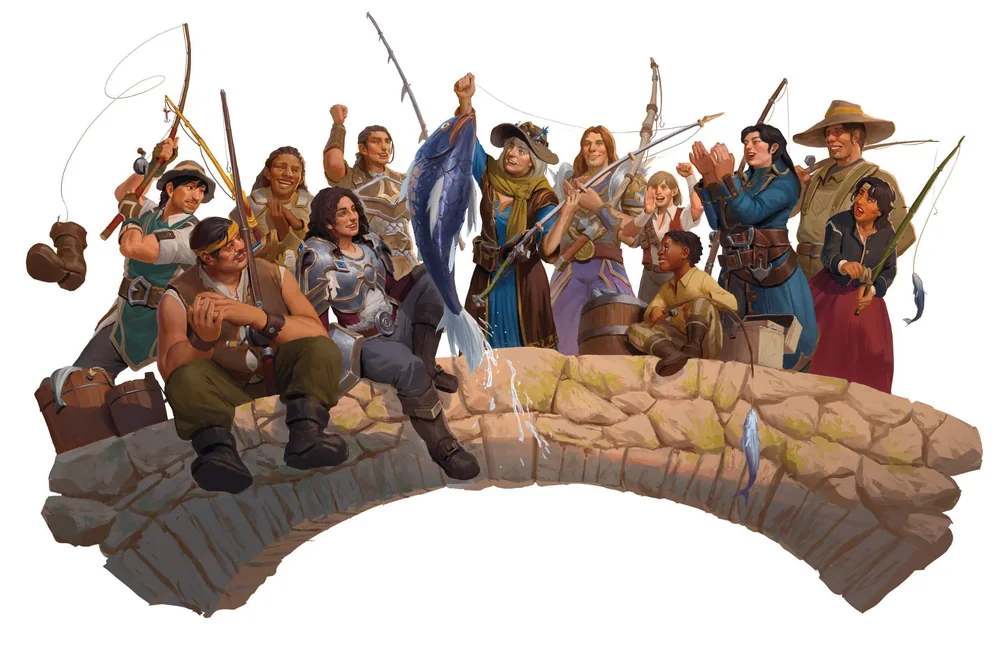
Human traits
The preview uses the revised 2024 Player’s Handbook Human traits, with additional Warcraft Origin feat choices.
Creature type: Humanoid. Size: choose Medium, approximately 4–7 feet tall, or Small, approximately 2–4 feet tall, when selecting the species. Speed: 30 feet.
- Resourceful. Completing a Long Rest gives you Heroic Inspiration.
- Skillful. Choose one skill in which to gain proficiency.
- Versatile. Choose an Origin feat. The Warcraft options below are available alongside your other eligible choices.
Human Origin feats
Each of these three new feats requires both the Human species and a World of Warcraft campaign. They express different cultural backgrounds; humans associated with Dalaran may instead choose Magic Initiate (Wizard).
- Arathi Heritage. Your human and elven ancestry gives you Advantage on saving throws against becoming or remaining Charmed. You also gain Lethargy Resilience: after failing a saving throw to avoid or end the Unconscious condition, you can turn that failure into a success. Once used, this benefit returns only after you complete 1d4 Long Rests.
- Child of the Sea. This Kul Tiran option gives you a Swim Speed equal to your Speed. You can also hold your breath for 2 + your Constitution modifier minutes, with a minimum duration of 1 minute.
- Will to Survive. Associated with Stormwind and Stromgarde, this feat lets you ignore the Incapacitated condition on your own turn, provided you are not also Unconscious. Choosing to do so gives you 1 Exhaustion level.
Human nations and Renown
- Stormwind. An Alliance kingdom whose public ideals centre on honour, justice and law, even though individual citizens may pursue very different lives.
- Kul Tiras. A maritime island nation with a celebrated navy. It returned to the Alliance under Lord Admiral Jaina Proudmoore after a period of isolation and internal conflict.
- Dalaran. The Kirin Tor’s city of mages travelled through the skies before its destruction; the preview places its surviving people in Dornogal.
- Stromgarde. Descendants of this fallen kingdom reclaimed their ancestral capital in the Arathi Highlands, restoring an Alliance foothold in the former lands of Lordaeron.
- Arathi Empire. Humans and high elves founded this distant eastern society. Their descendants combine both ancestries, generally resembling humans with slightly pointed ears, and venerate the Sacred Flame.
A human begins with Renown 3 with Stormwind (Alliance), except for a character from the Arathi Empire, who receives no starting Renown score.
For help choosing the additional Origin feat, see our guide to D&D feats. A thematic name does not remove a feat’s prerequisites.
Orc: inherited history, individual decisions
Orc characters can explore kinship, spiritual responsibility and the consequences of earlier conflicts. Blizzard’s Mag’har preview explains the “uncorrupted” orcs who rejected Gul’dan’s demonic bargain. That distinction is useful lore, not an automatic extra D&D trait list.
Our character idea: a veteran who now teaches younger adventurers how to survive without glorifying every fight. Give them one situation they will walk away from and one responsibility they refuse to abandon.
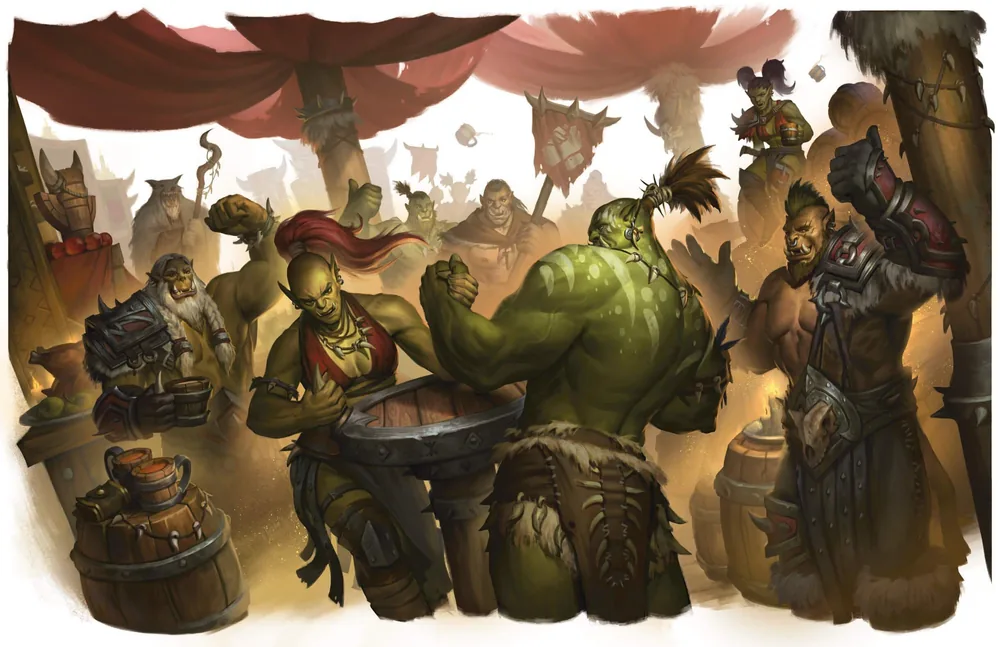
Orc traits
The preview uses the revised 2024 Player’s Handbook Orc traits.
Creature type: Humanoid. Size: Medium, approximately 6–7 feet tall. Speed: 30 feet.
- Adrenaline Rush. Use a Bonus Action to Dash and gain Temporary Hit Points equal to your Proficiency Bonus. You can do this a number of times equal to your Proficiency Bonus, regaining all uses after either a Short Rest or a Long Rest.
- Darkvision. You have 120-foot Darkvision.
- Relentless Endurance. If you would be reduced to 0 Hit Points without being killed outright, you can remain at 1 Hit Point instead. A Long Rest is required before you can use this again.
Orc Renown
Your starting score is Renown 3 with Orgrimmar (Horde).
For a martial starting point, explore our 2024 Battle Master Fighter guide, then check which Warcraft class adaptation your campaign uses.
Pandaren: a philosophy that changes decisions
Pandaren offer more than a recognisable silhouette or brewing joke. Li Li’s Travel Journal explores the contrast between Tushui principles and Huojin directness. One asks carefully about the right path; the other is more willing to act decisively with imperfect options.
Our character idea: a cook collecting recipes from people on both sides of a conflict. Their hospitality creates openings the party’s weapons cannot. Choose a philosophy, then give the character a situation that tests it. A philosophy becomes interesting when it changes a decision, rather than appearing only in a backstory paragraph.
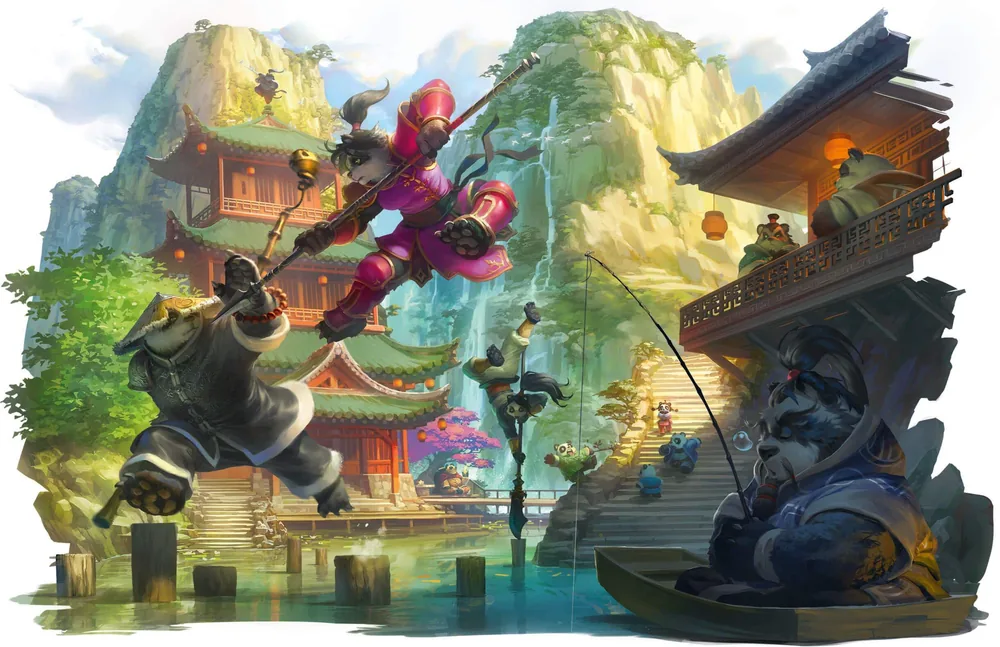
Pandaren traits
Creature type: Humanoid. Size: Medium, approximately 6–7 feet tall. Speed: 30 feet.
- Bouncy. You resist Bludgeoning damage caused by falling. This does not grant resistance to every source of Bludgeoning damage.
- Darkvision. Your Darkvision reaches 60 feet.
- Inner Peace. During a Short Rest, each Hit Point Die you spend restores 1 additional Hit Point.
- Quaking Palm. After you hit a creature with a melee attack on your turn, that creature cannot make Opportunity Attacks against your movement for the remainder of that turn.
Pandaren philosophies and Renown
At character creation, choose one of the two philosophies associated with the Wandering Isle:
- Huojin (Horde). Take decisive action against injustice; hesitation can be more harmful than an imperfect decision.
- Tushui (Alliance). Seek a principled life through discipline, reflection and careful judgement.
You begin with Renown 3 with your chosen faction.
Interested in the underlying tabletop class? Our 2024 Open Hand Monk guide explains a core Monk progression; apply the Warcraft expansion’s changes separately.
Tauren: strength with something to protect
Traditional tauren culture emphasises the Earth Mother, nature and community, as outlined in Blizzard’s introductory lore. Highmountain traditions add a particular connection to earth, river and sky, described in the allied-race announcement.
Our character idea: a patient mediator who carries a small carved reminder of everyone they have promised to bring home. Their size can make an entrance memorable without becoming their entire identity. Let their restraint matter as much as their strength.
For any lineage choice, check the printed size category and action costs. A towering description does not automatically make a player character Large or grant a monster’s attacks.
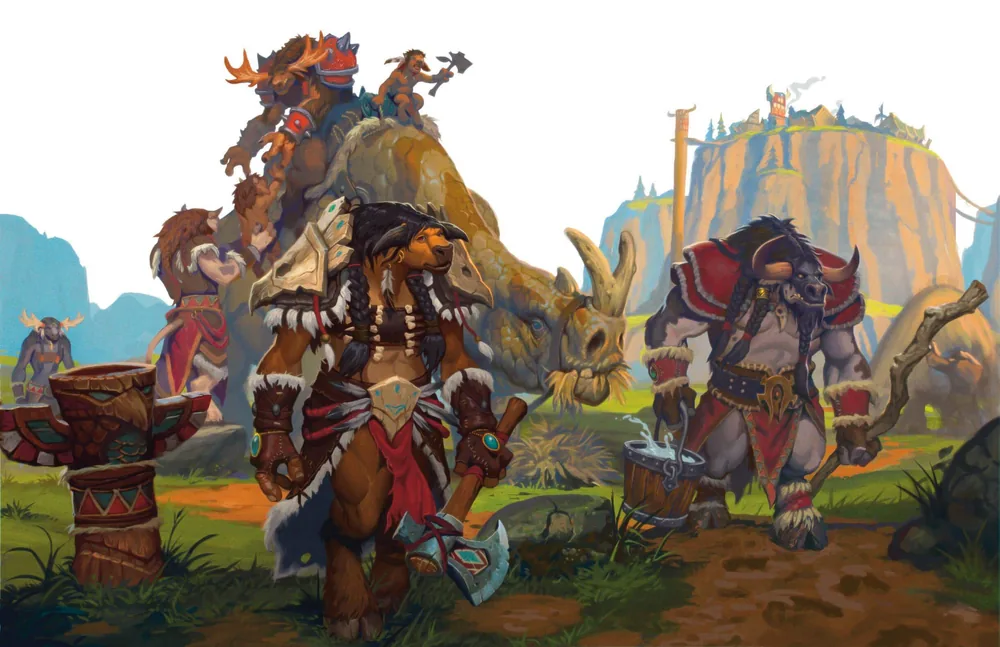
Tauren traits
Creature type: Humanoid. Size: Medium, despite a typical height of approximately 8–9 feet. Speed: 30 feet.
- Horns. When an Unarmed Strike hits and deals damage, you may replace its normal damage with 1d6 + your Strength modifier Piercing damage.
- Goring Rush. On your turn, immediately after you Dash and move at least 20 feet, you may make one Unarmed Strike as a Bonus Action.
- Hammering Horns. Immediately after a melee attack made as part of your Attack action hits, you may use a Bonus Action to make a shoving Unarmed Strike against that target, provided it is within 5 feet. This shove can push it up to 10 feet away rather than the usual 5 feet.
- Tauren Lineage. Choose Mulgore, Highmountain or Taunka. For a lineage ability that requires a saving throw, choose Strength, Constitution or Wisdom when selecting the lineage. Its save DC is 8 + that ability’s modifier + your Proficiency Bonus.
Tauren lineages
- Mulgore Tauren. These are the tauren associated with Thunder Bluff. When taking the Attack action, you can exchange one attack for a magical war stomp, provided you are not Prone, flying, climbing or swimming. Choose creatures in a 5-foot Emanation around you; each must make a Constitution saving throw or become Stunned until the end of your current turn. The duration does not extend to the end of your next turn.
- Highmountain Tauren. The Broken Isles’ antlered tauren bear the blessing of Cenarius. As an action, charge up to your Speed without provoking Opportunity Attacks, passing through other creatures’ spaces. Each Medium or smaller creature whose space you enter must succeed on a Strength saving throw or take damage equal to your Proficiency Bonus + your Strength modifier and become Prone. A creature can take this damage only once per turn.
- Taunka. These northern relatives adapted to Northrend’s cold. Their thick hide gives a +1 bonus to Armor Class and Cold damage resistance.
Tauren Renown
You begin with Renown 3 with Thunder Bluff (Horde).
Troll: faith, community and ambition
Warcraft trolls are not the regenerating monsters of a typical D&D encounter. Their cultures and relationships with the loa are central to their identity. Blizzard’s Zandalari introduction highlights an ancient civilisation, its naval strength and its striking association with dinosaurs.
Our character idea: a messenger who carries offerings as carefully as official dispatches. They know which promises are personal, which belong to their community and which were made to powers that expect repayment. Decide how their faith guides everyday choices without turning every conversation into a lecture.
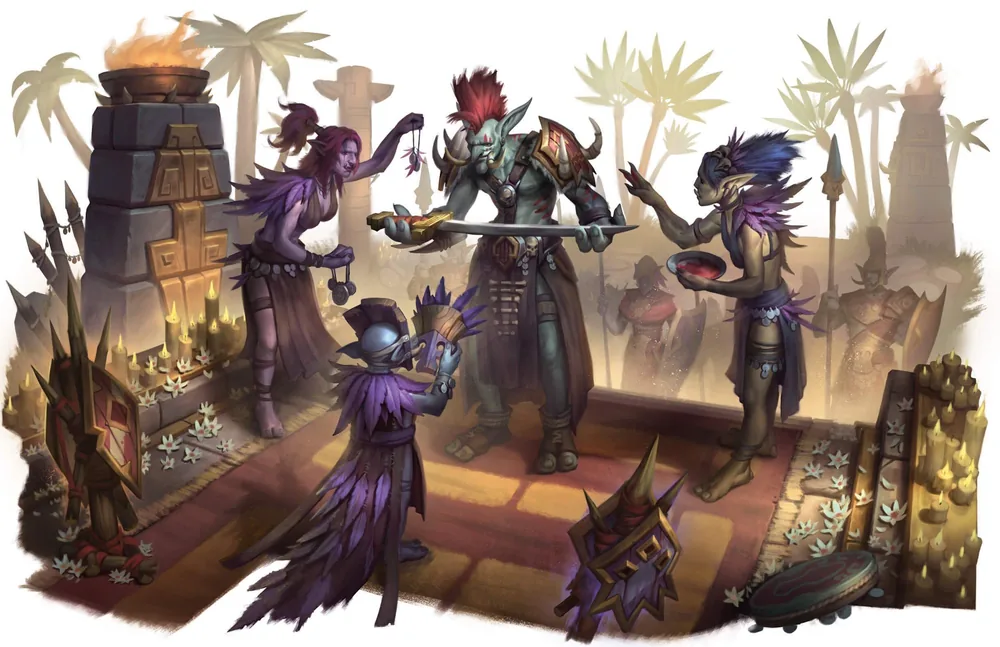
Troll traits
Creature type: Humanoid. Size: Medium, approximately 7 feet tall. Speed: 30 feet.
- Bloodied Frenzy. Being Bloodied gives you Advantage on attack rolls.
- Darkvision. Your Darkvision reaches 60 feet.
- Troll Healing. When spending Hit Point Dice to heal during a Short Rest, use each die’s maximum result instead of rolling it, then add your Constitution modifier as usual.
- Troll Lineage. Choose Amani, Darkspear or Zandalari for the additional benefit described below.
Troll lineages
- Amani Troll. The forest trolls of Zul’Aman have a long history of fighting Quel’Thalas’ elves. The preview describes a recent, uneasy partnership with blood elves against the Void, alongside continuing distrust of outsiders. Lineage benefit: whenever you spend Heroic Inspiration, recover one expended Hit Point Die.
- Darkspear Troll. Displaced jungle trolls joined Thrall’s Horde and made a new home on the Echo Isles, off Durotar. Lineage benefit: whenever you Dash, Difficult Terrain consisting of ice, rubble, snow or undergrowth costs no additional movement until that turn ends.
- Zandalari Troll. Heirs to the ancient troll empire, the Zandalari combine spiritual traditions with dinosaur cavalry and the Golden Fleet. Queen Talanji’s empire has joined the Horde. Lineage benefit: rolling a 1 on the d20 of a D20 Test grants Heroic Inspiration at the end of the current turn.
Troll Renown
The preview assigns Renown 3 with the Darkspear Tribe (Horde) to both Darkspear and Zandalari trolls. Amani trolls receive no starting Renown score.
Vulpera: resourcefulness belongs to the whole caravan
The official Vol’dun guide describes vulpera caravans surviving harsh desert conditions through scavenging, trade and cooperation. Their networks of supplies and information give a character reasons to know people, notice useful objects and care about a safe route home.
Our character idea: a caravan scout searching for a missing trading partner. They remember favours with astonishing precision and always pack one more useful thing than anyone expected. Resourcefulness need not mean stealing from the party: generosity can be part of the same survival strategy.
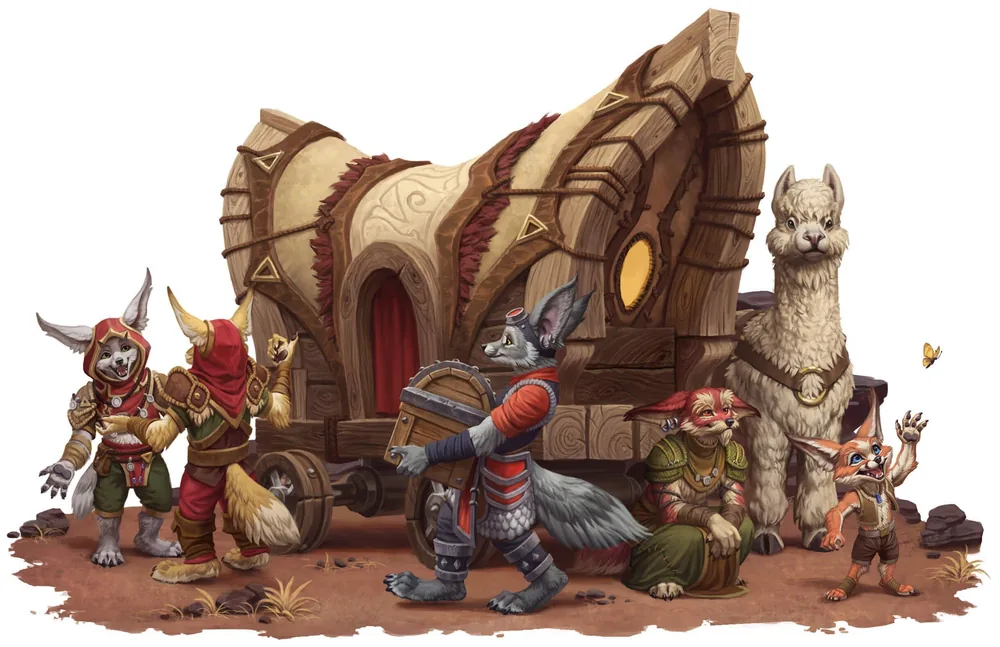
Vulpera traits
Creature type: Humanoid. Size: Small, approximately 4–5 feet tall. Speed: 30 feet.
- Darkvision. Your Darkvision reaches 60 feet.
- Fire Resistance. You resist Fire damage.
- Nose for Trouble. The first time you take damage after rolling Initiative, subtract your character level from that damage, to a minimum of 0.
- Vulpera Nimbleness. You may pass through the space of a creature one size larger than you, but you cannot finish your movement in its space.
Vulpera Renown
You begin with Renown 3 with Orgrimmar (Horde).
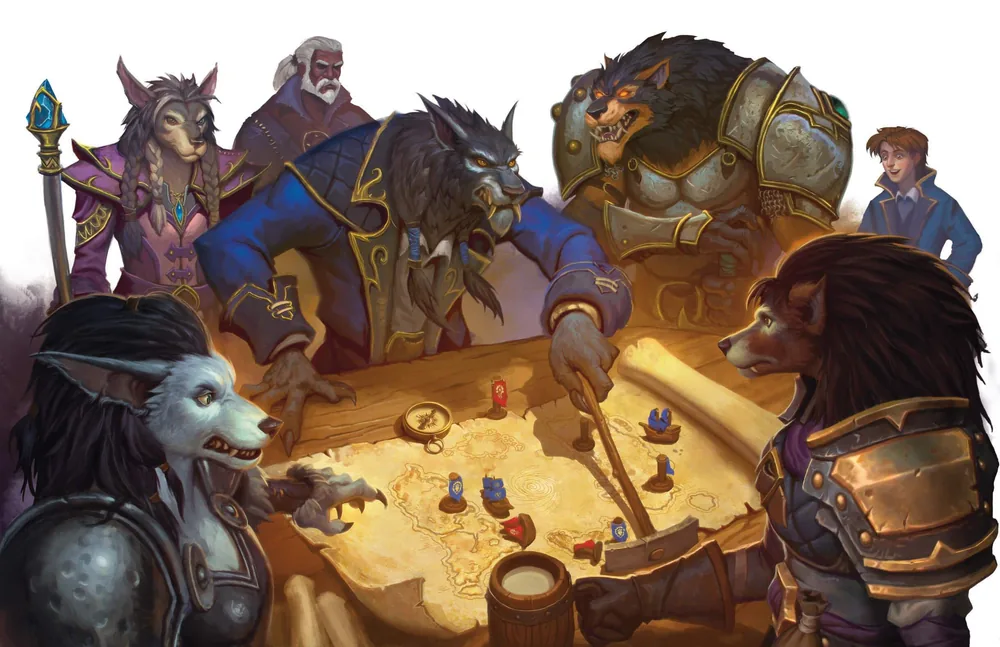
Worgen: the person remains inside the transformation
Gilnean worgen carry a curse that reshaped their lives. Blizzard’s Cataclysm introduction describes their struggle and the night elves’ help in controlling their ferocity. The D&D reveal also identifies the Ritual of Balance as part of that control.
Our character idea: an impeccably polite investigator who is far more embarrassed by torn sleeves than by a frightening appearance. Give them enduring habits, loyalties and ambitions in both forms. Transformation should reveal another facet of the same character, rather than erase the personality the party has come to know.
Worgen traits
Creature type: Humanoid. Size: Medium, approximately 4–7 feet tall. Speed: 30 feet.
- Darkflight. Spend a Bonus Action to enter bestial form for 1 minute, or end the transformation sooner with another Bonus Action. Transforming grants Temporary Hit Points equal to twice your Proficiency Bonus. You can transform a number of times equal to your Proficiency Bonus, with all uses restored by a Long Rest. While transformed, you gain the three benefits below.
- Increased Speed, while transformed. Add 10 feet to your Speed.
- Reactive Movement, while transformed. When a creature ends its turn within 5 feet of you, you may spend your Reaction to move up to 10 feet without provoking Opportunity Attacks. A creature merely entering that distance does not trigger this ability.
- Necrotic Resistance, while transformed. You resist Necrotic damage.
- Darkvision. Your Darkvision reaches 60 feet.
- Instinctual Shift. When you roll Initiative with at least one Darkflight use remaining, you may immediately spend a use to transform. This transformation requires no action.
Worgen Renown
You begin with Renown 3 with Gilneas (Alliance).
Choosing a Warcraft class without copying the MMO
Start with the role you want to play in the story, then use the actual tabletop mapping. The official class preview adapts Warcraft classes through existing D&D foundations. An Evoker uses an adapted Draconic Sorcery Sorcerer, a Death Knight uses the Oath of the Ebon Blade Paladin, and a Demon Hunter uses a Ranger subclass. Warcraft’s Shaman draws on Barbarian options rather than simply becoming a Cleric.
Evoker, Death Knight and Demon Hunter are hero classes that normally begin at level 3 or higher. The preview associates Evokers with dracthyr and Demon Hunters with particular elves, while directing players to discuss other species with the DM. Treat that as a conversation about the campaign, not a blanket permission to ignore the setting or an absolute ban the preview never states.
Our recommendation: sketch one ordinary turn, one helpful thing outside combat and one relationship that explains joining the party. A character who only works when a rare combination activates may be less enjoyable than one with several reliable contributions.
- For a first tabletop character: choose a class whose normal turn is easy for you to explain. Learn that before adding elaborate interactions.
- For a returning Warcraft player: bring the character’s identity across, then rebuild the abilities using tabletop rules. Familiar names can have different effects.
- For a thematic pairing: a dracthyr Evoker, an inquisitive elf Mage or a travelling pandaren Monk offers a clear starting story. These are character ideas, not tested damage rankings.
- For party balance: compare exploration, social skills and recovery as well as damage. Ask what your friends already want to play.
Our D&D class guide explains the foundations. The main Warcraft crossover guide covers the wider class mapping, dungeons and product formats.
Renown, faction choices and a party that works together
The official overview confirms that species can provide starting faction Renown and that the expansion builds on the Dungeon Master’s Guide reputation system. The individual starting scores above follow the cited preview. Record the faction as well as the number: reputation with one organisation is not automatically reputation with every ally.
Before a mixed-faction campaign begins, agree why these particular people cooperate. A shared rescue, a neutral employer, a dangerous discovery or a debt owed to the same person can work. Give the alliance a reason to survive the first disagreement.
Ask each player for three short answers: Who helped you? Who expects something from you? Which member of this party has already earned your trust? Those answers are more useful to the opening session than a list of historical enemies. Faction tension can create good scenes when everyone wants to play through it; it becomes exhausting when it prevents the adventure from starting.
A character-sheet checklist before your first session
- Agree the rules version and starting level. Confirm the revised core rules, the expansion and any older options the DM permits.
- Choose one species package. Record creature type, size and movement from that option. Do not combine it with a visually similar monster or MMO racial list.
- Resolve lineage choices. Write down the selected branch and any spellcasting ability it asks you to choose.
- Separate always-on and limited features. Note action costs, uses, recharge conditions and the levels when new benefits appear.
- Check spells individually. Record free castings, preparation, spell-slot use and Concentration where applicable. A familiar spell name is not enough.
- Record culture and Renown separately. Keep mechanical benefits distinct from the people, organisations and traditions in your backstory.
- Give the party a reason to keep you around. Include a useful skill, a personal goal and a relationship someone else can build on.
You can organise the result with our character-sheet guide and step-by-step character creation guide. For remote sessions, our free D&D online tools comparison helps with maps, conversation and shared play. If you are assembling a physical kit, the guide to how many dice D&D needs explains the essentials before you choose a set.
World of Warcraft D&D species FAQ
Is World of Warcraft officially coming to D&D?
Yes. Wizards and Blizzard have announced the official D&D: World of Warcraft Gameplay Expansion. It is separate from earlier fan-made Warcraft conversions. Blizzard’s announcement confirms the collaboration.
When can I use the new Warcraft species?
The announced general release is 17 November 2026, with eligible D&D Beyond Master Tier early access beginning 3 November. An October 27 shipping notice warns that some North American physical products may miss their early-access arrival. That notice is not a general delay to digital access. Confirm the format and local availability before ordering.
Are all sixteen races new to D&D?
No. Eleven are advertised as new species options. Dwarf, Elf, Goblin, Human and Orc are adaptations. Mechagnome is the new gnome-related entry in the product roster; ordinary Gnome already has core D&D rules.
Where do the Warcraft traits and lineage tables come from?
The detailed Warcraft mechanics follow the cited pre-release species report. We have rewritten the explanations and retained the reported numbers, action costs, spell progression and restrictions. Shared core rules are checked against SRD 5.2.1; the published Warcraft expansion remains the authority for final wording and any corrections.
Which Warcraft race is best for a D&D character?
There is no defensible universal winner from the current public information. Choose around the campaign’s level range, the actions you enjoy taking and the rest of the party. A thematic fit can make a character more memorable; reliable mechanical comparisons require the complete rules.
Can I use one in a non-Warcraft campaign?
Discuss it with your DM. A campaign needs decisions about setting-specific features, factions and the core rules being used. Agree on any changes before play and record them on the sheet, so nobody has to negotiate a feature for the first time during a difficult encounter.
Sources and rules attribution
We prioritised the official species reveal, product roster, class preview and the Blizzard lore sources linked within each entry. The Warcraft-specific trait, lineage and Renown explanations are adapted from the Dungeons & Dragons Fanatics preview linked above. Character hooks and planning advice are our editorial suggestions; we have not claimed to playtest unreleased species.
This work includes material from the System Reference Document 5.2.1 (“SRD 5.2.1”) by Wizards of the Coast LLC, available at https://www.dndbeyond.com/srd. The SRD 5.2.1 is licensed under the Creative Commons Attribution 4.0 International License, available at https://creativecommons.org/licenses/by/4.0/legalcode. The core-rule descriptions above are condensed explanations; Warcraft-specific material is not represented as SRD content. Header and race artwork are from Wizards of the Coast / Blizzard Entertainment; individual artist credits and source links appear with each image.